

Twoarm humpback anglerfish
Dibrachichthys melanurus
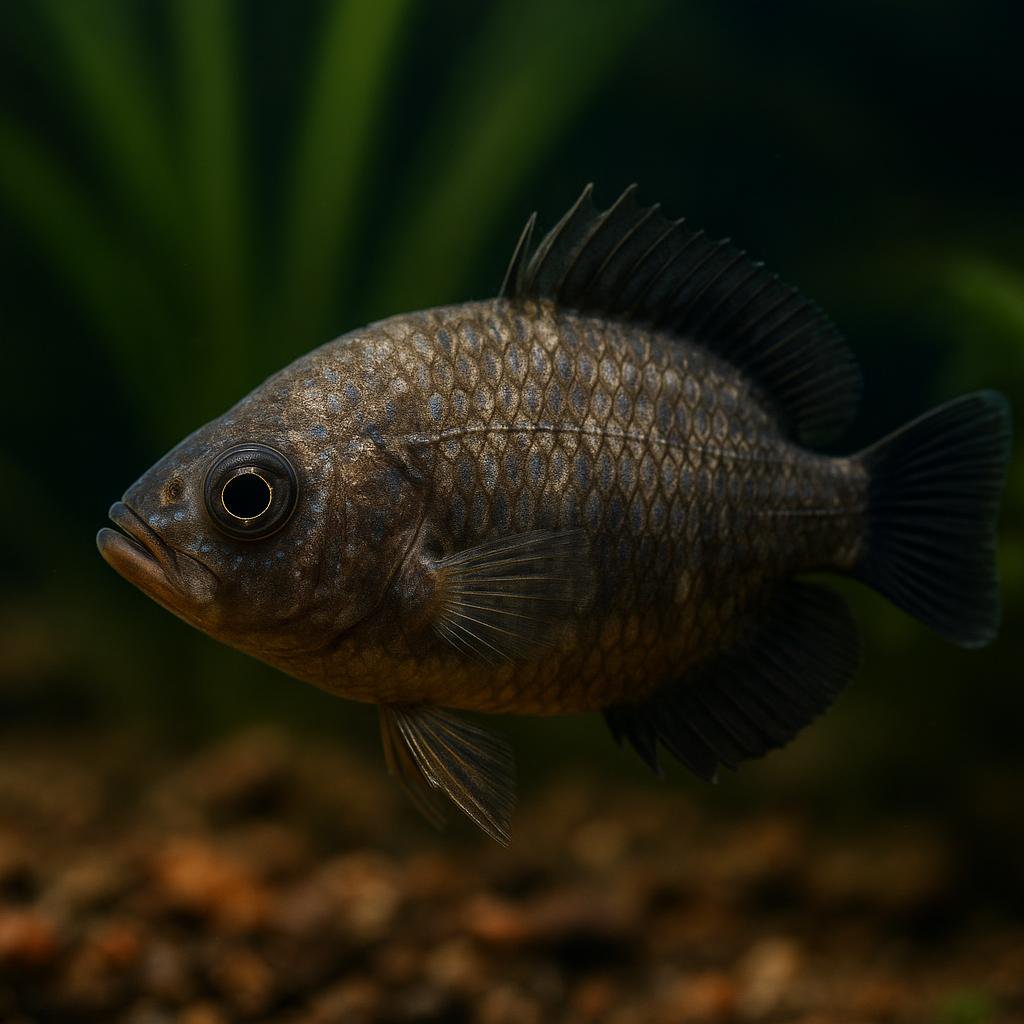
The Twoarm humpback anglerfish features a robust, deep body with two prominent dorsal filamentous appendages and a mottled brown-grey coloration.
This page includes AI-generated images. Why am I seeing AI images?
About the Twoarm humpback anglerfish
This is a tiny, uncommon little anglerfish relative from northern Australia/Indonesia that hangs out on sandy-mud and rubble bottoms. Think of it like a mini ambush predator that spends its time sitting still and blending in, not cruising around the tank. It is super cool in a nerdy way, but it is absolutely not a normal aquarium species you will see in the trade.
Also known as
Quick Facts
Size
5.7 cm SL
Temperament
Semi-aggressive
Difficulty
Expert
Min Tank Size
30 gallons
Lifespan
unknown
Origin
Eastern Indian Ocean to Western Pacific
Diet
Carnivore - small fishes/crustaceans (ambush predator); meaty frozen foods if adapted
Water Parameters
23.3-28.3°C
8-8.4
7-12 dGH
Need a heater for this species?
This species needs 23.3-28.3°C in a 30 gallon tank. Use our heater calculator to find the right wattage.
Calculate heater sizeCare Notes
- Plan around their lifestyle: dim tank, lots of overhangs/caves, and low flow zones so they can sit and lure without getting blasted. A bare-bottom or very thin sand layer makes it easier to keep leftover food from rotting.
- Keep marine salinity steady at 1.024-1.026 and don't let pH swing (8.1-8.4); they crash fast when stability slips. Ammonia and nitrite have to be zero, and keep nitrate low (ideally under ~10-20 ppm) because they sulk and stop eating in dirty water.
- They are ambush predators, so target-feed with tongs and watch the swallow - they can take surprisingly big meals, then go days without. Start with thawed marine meaty foods (silversides, smelt, squid, shrimp) and avoid freshwater feeders because that combo often ends in fatty liver and mystery deaths.
- Do not keep with anything that fits in their mouth, because it will become food, fast. Also avoid nippy fish and curious crabs/shrimp - they will chew on the lure/skin and stress the angler into refusing food.
- Quarantine is not optional: these guys come in with parasites and bacterial issues a lot, and meds are harder on them than on most reef fish. If you have to treat, go gentle and monitor oxygen like a hawk because they handle low O2 poorly.
- Watch for gulping, hanging at the surface, or rapid breathing after a big meal - that's usually oxygen or water-quality trouble, not 'normal angler laziness'. Siphon uneaten chunks right away since one missed piece can spike ammonia overnight in a smaller system.
- Breeding is a long shot in home tanks: anglers can spawn pelagic egg veils in the water column, and you basically need big volume, steady seasons, and a plan for microscopic live foods. If you ever see a gelatinous ribbon/veil, pull it to a separate kreisel-style setup before filtration shreds it.
Compatibility
Good Tankmates
- Other anglers or frogfish of similar size (only if the tank is big, plenty of space, and you can watch them closely) - they can tolerate each other, but if one can fit the other in its mouth, it will try
- Sturdy, non-nippy scorpionfish types (small Scorpaenopsis or similar) that are too big to be swallowed - they tend to ignore each other and just do the sit-and-wait thing
- Lionfish that are the same size or bigger (think dwarf lions with an angler that cannot mouth them) - works best when neither one is snack-sized and feeding is consistent
- Medium to larger moray eels (snowflake eel, zebra eel) - they mostly keep to their lanes, and they are not the kind of fish the angler can easily inhale
- Tough, bigger hawkfish (like a large flame hawk) only if its clearly too big to eat - perchers tend to coexist fine as long as the angler is not tempted
- Large, hardy reef-safe-ish inverts like big cleaner shrimp are still a gamble, but big brittle stars and larger urchins can work if you accept the angler might try dumb things at feeding time
Avoid
- Any small fish you actually like (gobies, blennies, chromis, firefish, small wrasses) - if it fits in the mouth, it will disappear overnight, guaranteed
- Nippy or pushy fish (most damsels, triggers, many puffers) - they stress the angler, steal food, and some will pick at the lure and fins
- Fast food-hogs like tangs and big wrasses - not because they will get eaten, but because the angler is slow and loses every feeding unless you target feed
- Anything venomous or spiny that could injure the angler if it tries to swallow it (small rabbitfish, some spiny lionfish that are borderline size-wise) - the angler does not always make good choices
Where they come from
Twoarm humpback anglerfish (Dibrachichthys melanurus) are deepwater anglers from the Indo-Pacific. You are looking at an animal built for cold, dark, high-pressure life - a sit-and-wait predator that does not do laps around a reef.
That origin story matters because most of the usual "marine tank" assumptions (bright lights, warm temps, lots of flow, busy tankmates) work against them.
This is an expert-only fish mostly because of temperature and feeding. If you cannot do chilled marine reliably, stop here and pick a shallow-water predator instead.
Setting up their tank
Think "cold, quiet, and stable" more than "big and flashy." I have had the best luck treating them like a coldwater ambush fish that wants a calm corner and predictable conditions.
- Tank size: bigger is easier for stability, but they do not need a huge footprint to "swim." I would not bother under 75 gallons, and 120+ makes temperature swings and nitrate control way less stressful.
- Temperature: you need a chiller. Aim cold (many deepwater anglers are kept in the low-to-mid 50s F / ~12-14 C range in serious systems), and pick a setpoint you can hold 24/7 without cycling.
- Lighting: dim. They do not need reef lighting, and bright lights just stress a fish that is designed for darkness.
- Flow: moderate to low. Give them areas where food can settle and they are not getting blasted.
- Aquascape: open sand or fine rubble with a few low rocks. You want them to be able to park, not wedge into sharp rockwork.
- Filtration: heavy and boring - oversized skimmer (if you are running at temps where it still performs), lots of biological capacity, and mechanical filtration you can clean often. These are messy eaters.
- Lid: tight. Not because they are jumpy, but because cold systems sweat and evaporate weirdly, and you do not want salinity creep and gaps. Plus you are running a chiller and plumbing.
Set the chiller up with redundancy in mind: temp controller, alarms, and a plan for a stuck-on heater or a chiller failure. Deepwater fish have way less tolerance for "oops, it hit 72F for a day" than typical marine stock.
Water quality targets are the usual marine basics (stable salinity, low ammonia and nitrite, controlled nitrate), but the trick is keeping them stable in a cold system. Do smaller, regular water changes rather than big swings. Match temp and salinity closely or you will see them shut down and refuse food.
What to feed them
Feeding is the make-or-break part. This fish is a gulp predator with a huge mouth for its body size. It will take meaty items and it will overeat if you let it.
- Best foods: marine fish flesh (silversides, smelt, chunks of marine fish), squid, shrimp, scallop. Mix it up.
- Avoid: freshwater feeders (goldfish, rosy reds) - wrong fats and a great way to wreck a predator long-term.
- How to offer: feeding tongs are your friend. You can also use a feeding stick and present the food right in front of the mouth.
- Portion size: smaller pieces more often beats one huge chunk. If the belly looks like a marble swallowed a golf ball, you fed too much.
- Supplements: soak occasionally in a marine vitamin and HUFA supplement if you are doing a lot of frozen items.
Do not let them eat tankmates "as enrichment." They will, and it is not cute when you find a half-swallowed fish stuck and both animals die. Keep food sized appropriately and keep potential prey out of the tank.
My practical schedule: once they are eating confidently, a modest meal 2-3 times per week is plenty. Newly imported fish may need more frequent small offers until they settle. Watch the body shape and the willingness to strike more than the calendar.
How they behave and who they get along with
They act like a rock with a mouth. Most of the time they sit. Then they strike. They are not "social" and they are not a community fish in any normal sense.
- Tankmate rule #1: if it fits in the mouth, it is food.
- Tankmate rule #2: if it does not fit in the mouth but can harass it, it is a problem.
- Best tankmates: honestly, none. A species tank is the least stressful setup.
- If you insist: very calm, coldwater-compatible fish that are too large to be swallowed and not aggressive. Even then, it is a gamble.
Mixing deepwater anglers with typical reef fish fails fast because of temperature mismatch alone. Warmwater fish might look fine for a week, then crash. Keep the system built around the angler, not around what you already have.
They can also injure themselves if startled. Sudden bright light, banging on the glass, or a hyper tankmate can trigger a frantic burst into rocks or seams. Give them a low-stress environment and leave them alone.
Breeding tips
Breeding this species in home aquaria is basically a "nice dream" situation. Deep-sea anglers have odd reproductive biology in the group, and even in public aquariums breeding is uncommon. On top of that, sexing them and conditioning them properly is not straightforward.
If you ever see courtship or spawning behavior, document it. Photos, temps, feeding schedule, and water parameters could actually be valuable to other keepers because there is not a lot of hobby-level info out there.
Common problems to watch for
- Refusing food after arrival: very common. Reduce light, reduce traffic around the tank, offer small pieces with tongs, and do not keep "testing" it with a dozen foods per day. Give it time and stable temps.
- Bacterial infections after shipping: look for reddening, frayed fins, ulcers. Quarantine is hard with coldwater, but still worth doing if you can run a chilled QT.
- Parasites: less "visible" than on reef fish, but you can see flashing, rapid breathing, or weight loss. Treating in coldwater takes planning - many meds have temp and oxygen considerations.
- Buoyancy issues: often tied to gulping air at the surface, injuries, or overfeeding. Keep feeding underwater with tongs and do not let it snatch floating food at the surface.
- Overfeeding and fatty degeneration: predators beg with their mouth. Do not fall for it. Stick to a schedule and watch body condition.
- Chiller problems: the silent killer. A stuck heater, failed chiller, or clogged intake can swing temps quickly. Alarms and regular maintenance save fish.
If something looks off, check temperature first, then oxygenation, then ammonia. Coldwater predators can look "fine" right up until they are not, and the root cause is often a piece of equipment drifting out of range.
Similar Species
Other marine semi-aggressive species you might be interested in.
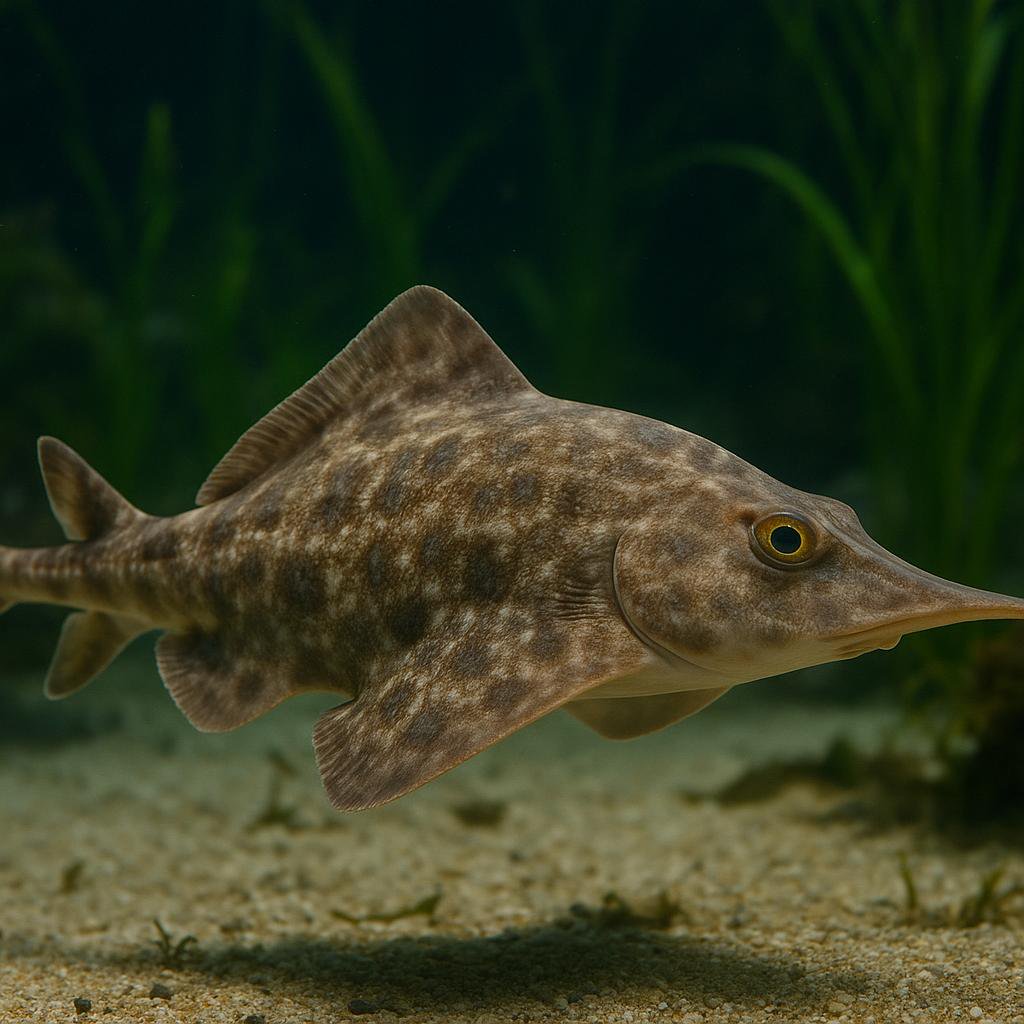
Aleutian skate
Bathyraja aleutica
This is a big, cold-water deep-slope skate from the North Pacific that cruises muddy bottoms and eats chunky benthic prey like crabs and shrimp. The really cool bit is its egg-laying skate life - it does distinct pairing (the classic skate "embrace") and drops those tough egg cases on the seafloor. Not an aquarium fish at all unless you're basically running a public-aquarium-style chilled system.
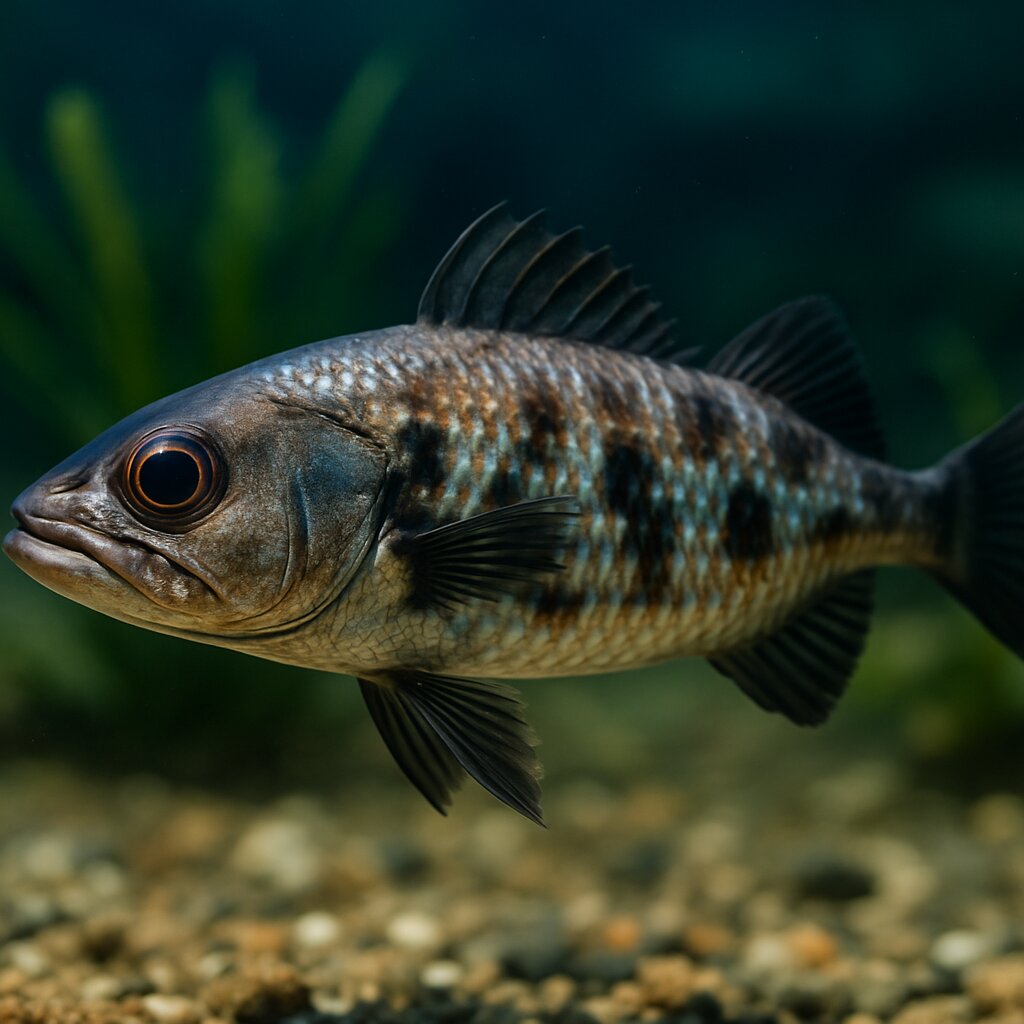
Antarctic dragonfish
Vomeridens infuscipinnis
Deep down around Antarctica, this sleek dragonfish cruises the water column like a little submarine, nearly neutrally buoyant so it can hover above the seafloor. It munches almost exclusively on Antarctic krill and lives in near-freezing water 500-800 m down, so it is a cool species to read about, not one for home tanks.
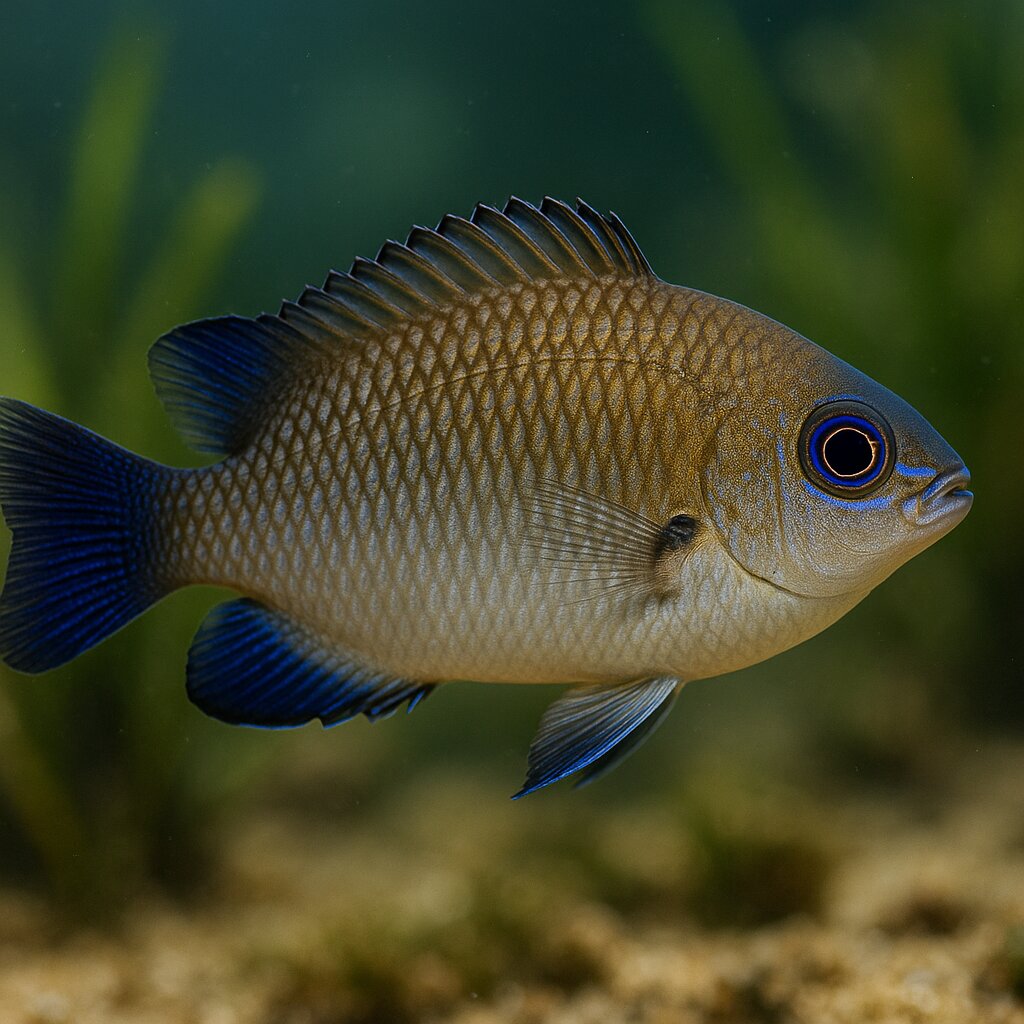
Arabian demoiselle
Neopomacentrus sindensis
A small lyretail damsel from the Persian Gulf and Arabian Sea, it hangs in loose groups around coral heads, rocks, and even pier pilings picking zooplankton from the flow. Think classic damsel toughness with a slightly milder attitude than the real bruisers, plus subtle yellow tail accents. Males clean a patch, get a mate to lay eggs there, and then stand guard fanning the clutch.
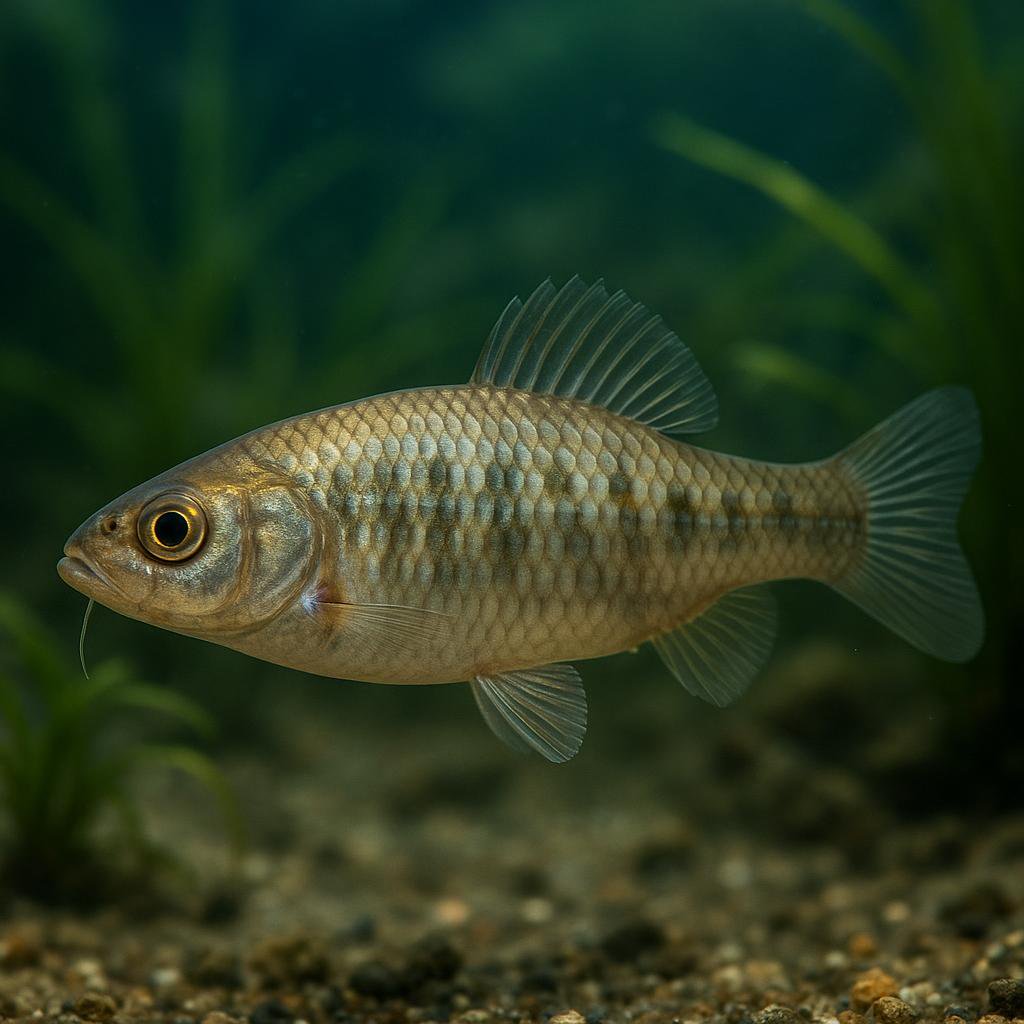
Arabian spiny eel
Notacanthus indicus
Notacanthus indicus is a deep-sea spiny eel (family Notacanthidae; not a true eel) known from the Arabian Sea on the continental slope at roughly ~960–1,046 m depth, with reported maximum length around 20 cm TL; it is a deep-water bycatch species and not established in the aquarium trade.
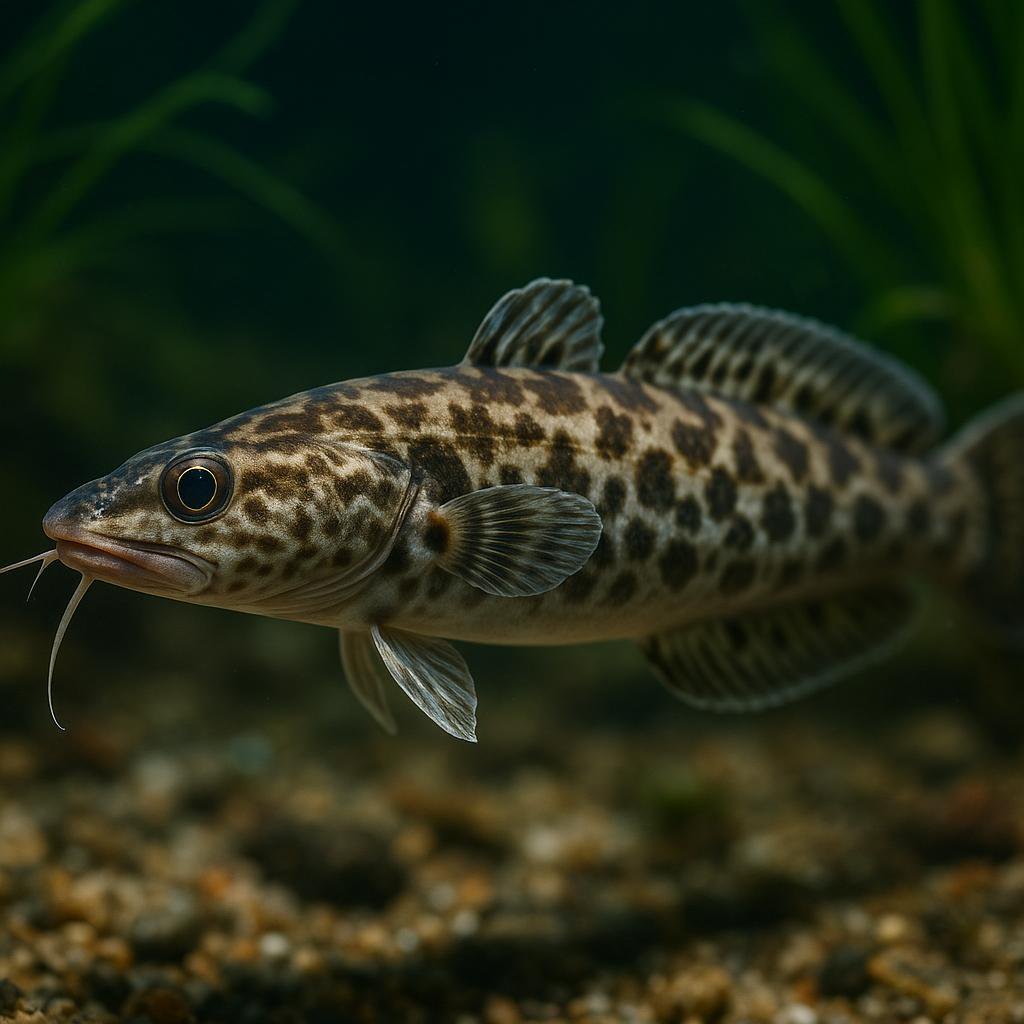
Arctic rockling
Gaidropsarus argentatus
This is a deepwater North Atlantic rockling (a cod relative) that hangs out on soft bottoms way down the slope. It is a cold-water, bottom-hugging predator that snoots around for crustaceans and will also take small fish when it gets the chance.
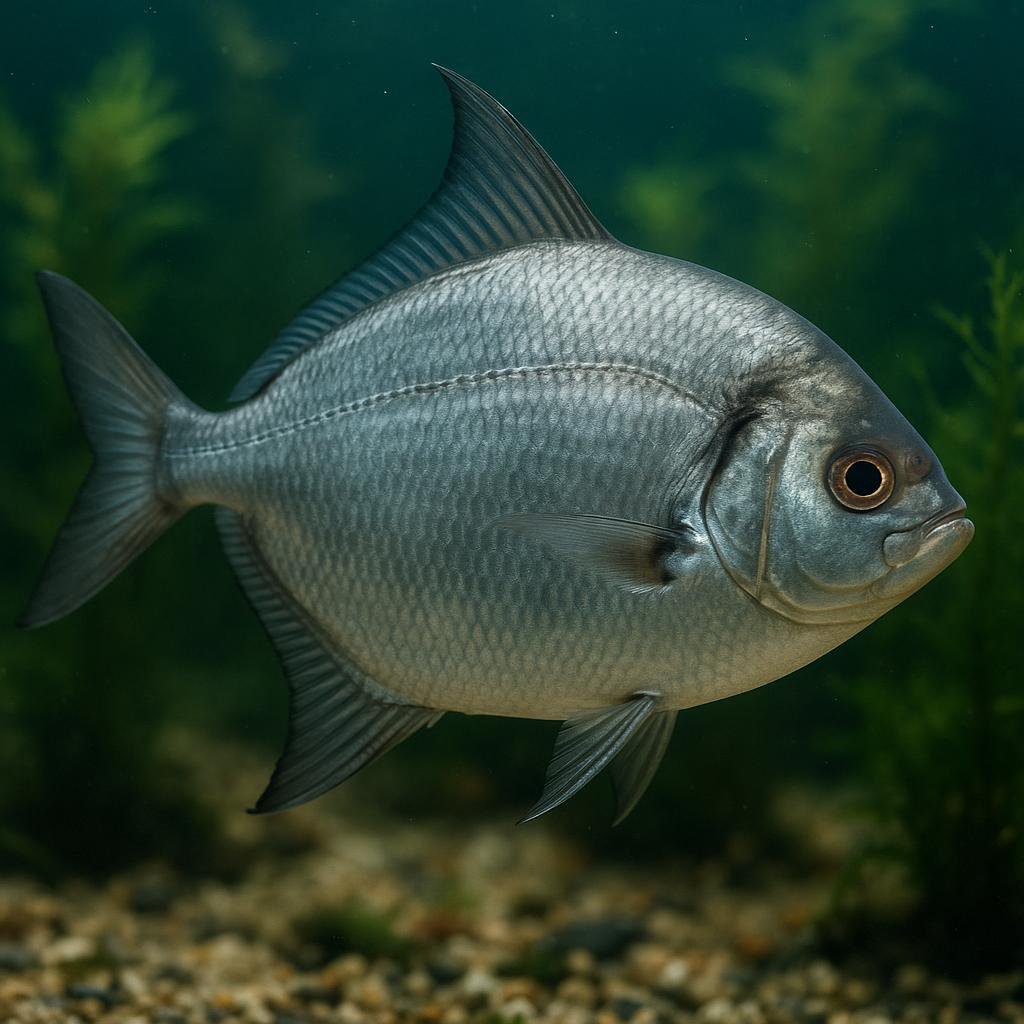
Atlantic pomfret
Brama brama
Brama brama is the Atlantic pomfret (aka Ray's bream) - a deep-bodied, open-ocean pelagic fish that cruises around in small schools and follows water temps. It is a legit big, wild marine species (not an aquarium fish) that eats other small sea critters like fish and squid, and it ranges across a huge chunk of the Atlantic plus parts of the Indian and South Pacific.
More to Explore
Discover more marine species.
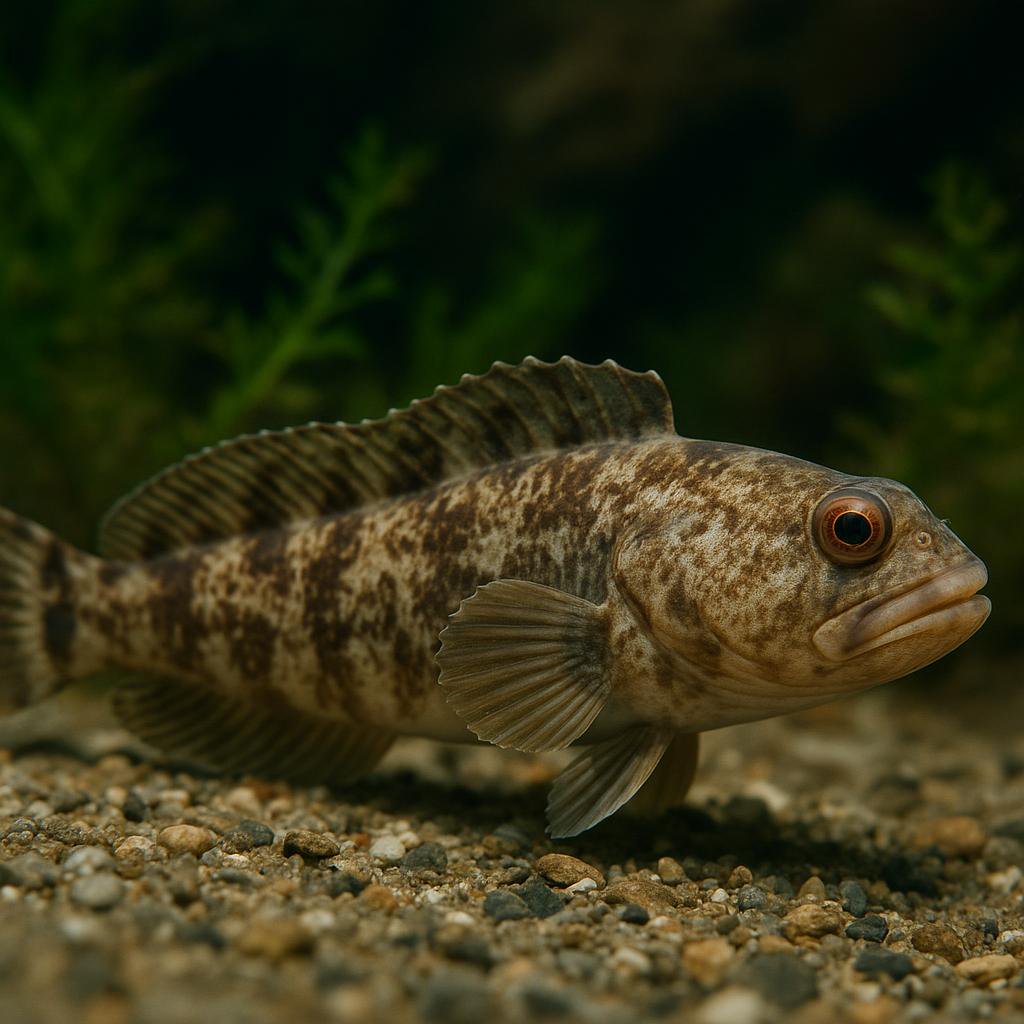
Abe's eelpout
Japonolycodes abei
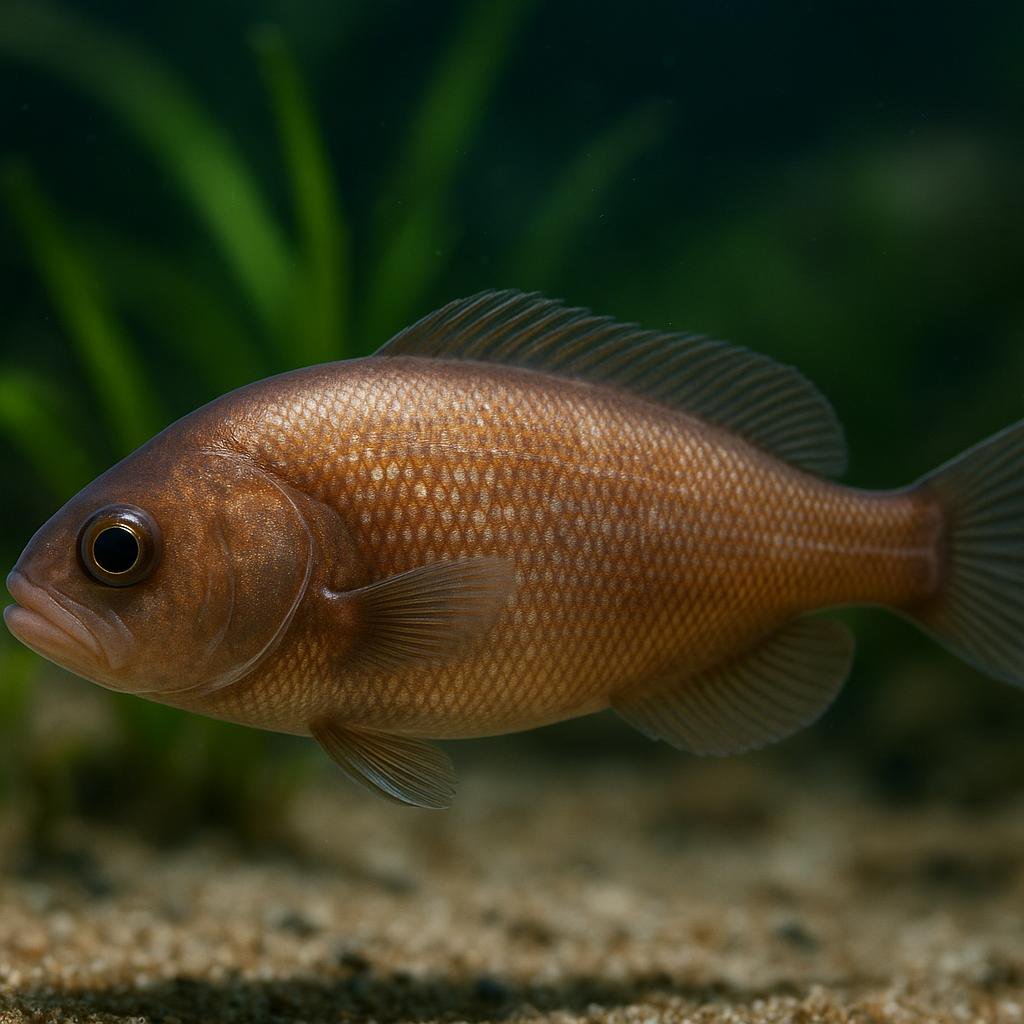
Japonolycodes abei is a temperate, deepwater demersal eelpout (family Zoarcidae) endemic to Japan (Kumano-nada Sea reported; other sources also report Sagami Bay and Tosa Bay). It is the only species in the genus Japonolycodes and occurs roughly 40-300 m depth, making it an uncommon/atypical aquarium species.
Affinis blind cusk-eel
Barathronus affinis
Barathronus affinis is a tiny, super-weird deep-sea blind cusk-eel from the western-central Indian Ocean. It is one of those gelatinous, loose-skinned brotula-type fishes that live way down in the dark and are basically never seen alive, so almost everything we know comes from preserved specimens and taxonomic work.
African red snapper
Lutjanus agennes
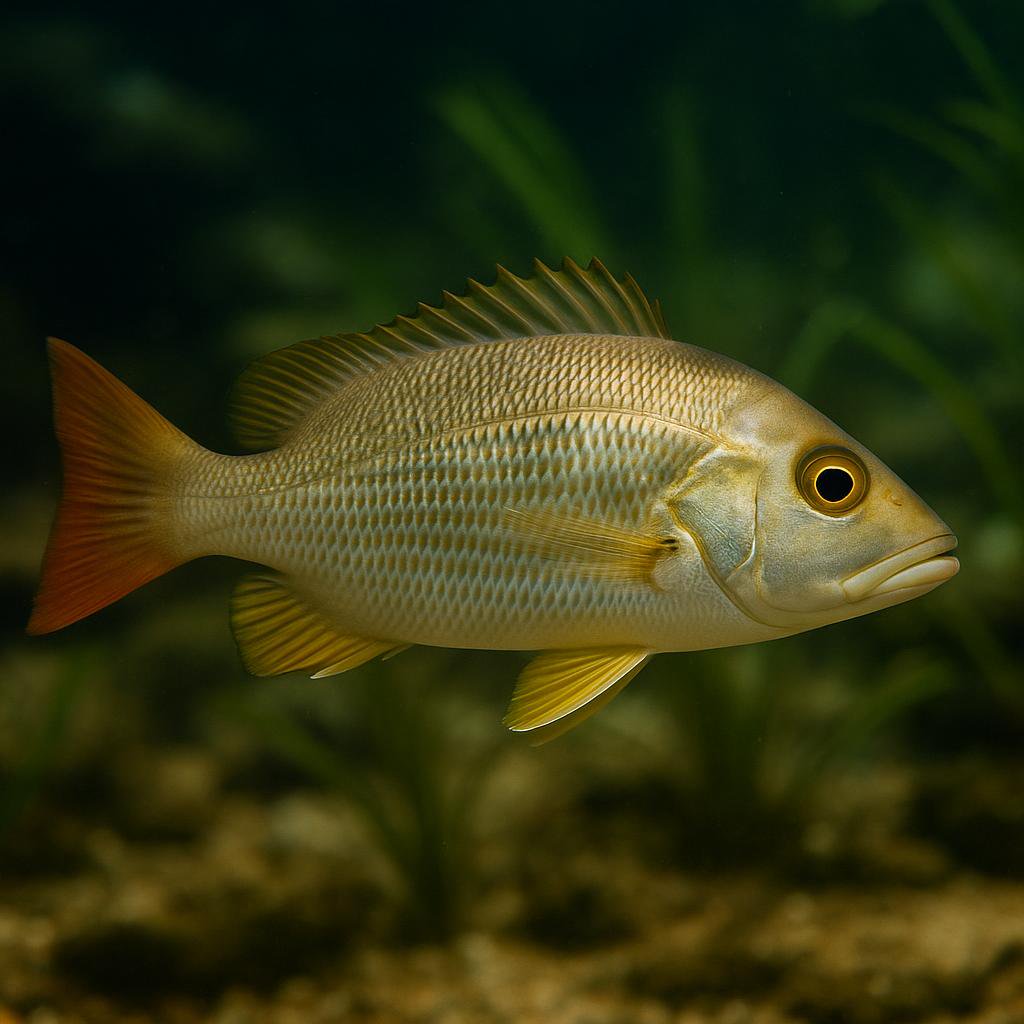
This is a true snapper from West Africa - a big, fast-growing predator that goes from coastal reefs to brackish lagoons and estuaries (especially as a juvenile). Super cool fish in the wild, but it gets absolutely huge and will eat smaller tankmates once it has the mouth for it, so its really more of a public-aquarium scale animal than a home-aquarium fish.
Allis shad
Alosa alosa
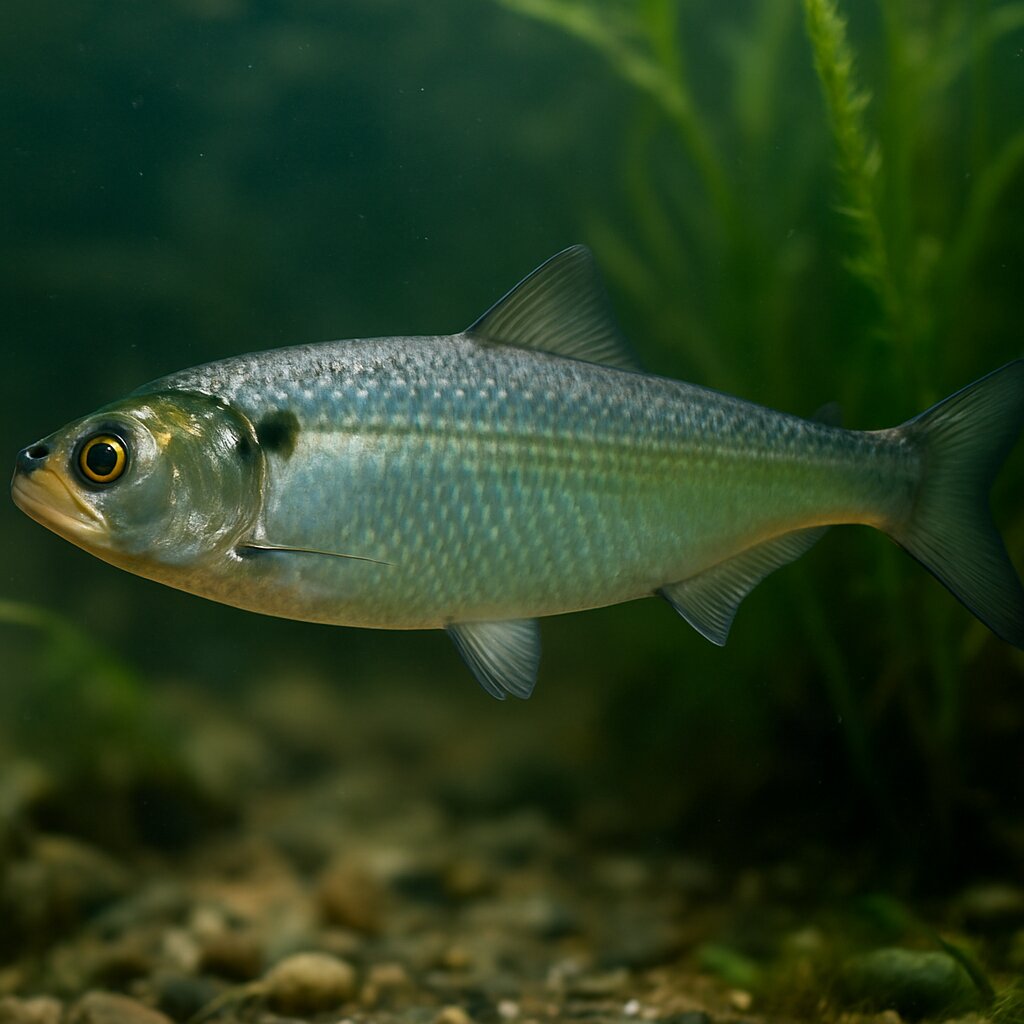
Gorgeous silver, fast-swimming shad that spends most of its life in the sea and then surges up big rivers in noisy, surface-spawning schools. It grows huge for a herring-type fish and needs cool, ultra-oxygenated water and tons of open space, so it is a public-aquarium species rather than a home tank fish.
Annandale's zebra sole
Zebrias annandalei
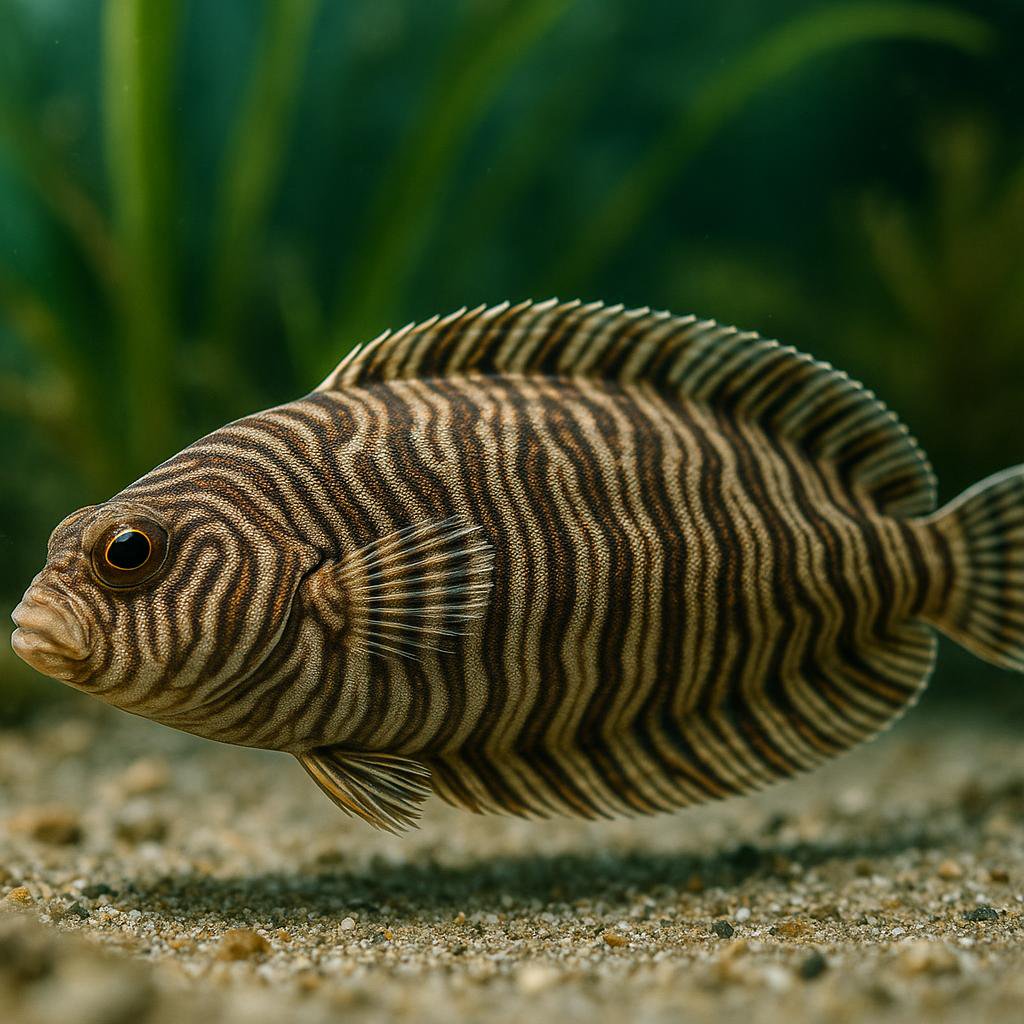
Zebrias annandalei is a small demersal sole from coastal India that inhabits sandy or muddy bottoms and buries for camouflage. It is rarely kept in home aquaria and would require a specialized marine sand-bottom setup and appropriate feeding.
Australian sawtail catshark
Figaro boardmani
Figaro boardmani is a small, deepwater Australian catshark with these cool saw-like ridges of spiny denticles along the tail and a neat pattern of dark saddle bands. It lives way down on the outer continental shelf and slope, so its natural water is cold, dim, and stable - totally not a typical home-aquarium fish. Diet-wise its a predator that goes after fish, crustaceans, and cephalopods.
Looking for other species?