

Dense-scale lanternshark
Etmopterus pycnolepis
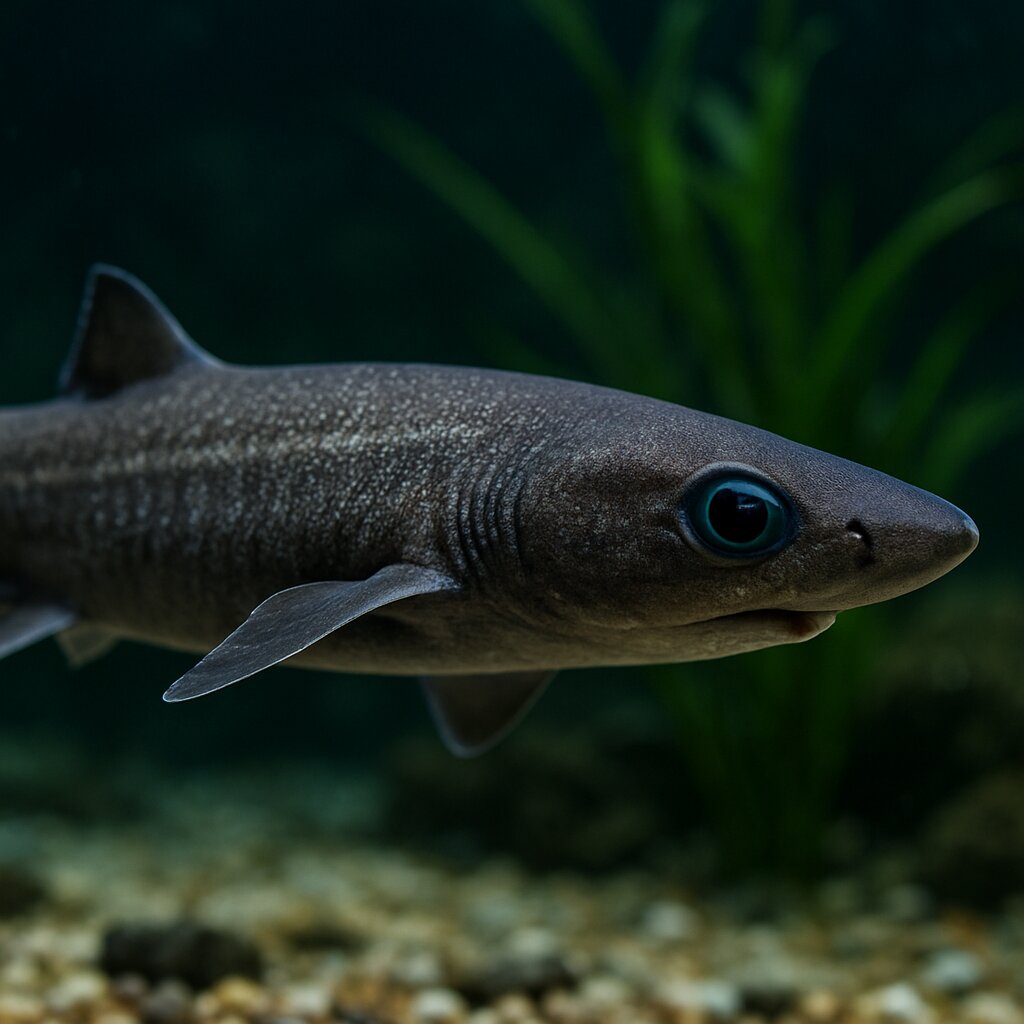
The Dense-scale lanternshark features a dark brown to black body with numerous small, closely spaced scales and bioluminescent markings along its belly.
This page includes AI-generated images. Why am I seeing AI images?
About the Dense-scale lanternshark
This is a small deep-sea shark that literally glows, thanks to rows of tiny photophores along its body. It sticks to cold, dark water on the Nazca and Sala y Gomez ridges and tops out around 20 inches, so it is a cool species to read about rather than try to keep. If you ever see one pictured, check out the dense, sandpaper-like skin and the subtle glow patterns.
Also known as
Quick Facts
Size
51.1 cm
Temperament
Semi-aggressive
Difficulty
Expert
Min Tank Size
1000 gallons
Lifespan
unknown
Origin
Southeastern Pacific
Diet
Carnivore - small fishes, cephalopods, crustaceans
Water Parameters
6-12°C
7.4-8.1
300-400 dGH
Need a heater for this species?
This species needs 6-12°C in a 1000 gallon tank. Use our heater calculator to find the right wattage.
Calculate heater sizeCare Notes
- Go round or oval, 10,000+ liters and 1 m+ deep, blacked-out sides, with only very dim red viewing light. Use gentle circular flow with diffused returns and guarded intakes, and skip rocks or anything they can face-plant into.
- Run 4-8 C at SG 1.025-1.026 and pH 8.0-8.3, with ammonia and nitrite at 0 and nitrate under 5 ppm. Keep oxygen near 100% and use redundant chillers, huge skimming, and power backup.
- Feed at night under red light: small drifting strips of squid, capelin, or herring 2-3 times per week. Soak in a marine vitamin/HUFA mix and do not rely on thiaminase-heavy smelt.
- New arrivals are wrecked by barotrauma and bright light, so black the tank out and keep foot traffic low for the first week. Never net them; move only in a water cradle.
- House it alone or with other slow, coldwater deep-sea species; no fast swimmers, no warmwater fish, and nothing bite-size. Even conspecifics may nip, so watch for snout and fin damage.
- They cruise nonstop and get pinned by strong jets, so keep low-velocity laminar flow and screened overflows. Sudden light or noise makes them bolt into walls, so keep the room dark and quiet.
- This shark is aplacental viviparous and has not been bred in home aquaria. Do not expect pups.
- Red gills, skin sloughing, refusal to swallow, or listing are red flags; check O2, temp, and ammonia first. If it stops cruising, you are close to a crash, so fix water and call a public aquarium contact.
Compatibility
Good Tankmates
- Big, calm temperate rockfish and other thick-bodied, non-nippy perch types in a chilled, dim tank
- Non-nippy coldwater sculpins and greenlings that mostly perch on rocks and are too large to fit in the shark's mouth
- Small to medium temperate skates that mind their business; target-feed the shark so the skate does not hog every squid strip
- Similar-sized, mellow coldwater catsharks with tons of floor space and hides; avoid mixing very different sizes
- Robust schooling temperate fish like big smelt or silversides that handle cool water and will not peck at fins
- Large, laid-back temperate basses or drums that ignore the shark and do fine in low light
Avoid
- Anything small enough to swallow, like little gobies, young wrasses, or other bite-size fish
- Nippy or equipment-chewing fish like triggers and puffers that go for fins and eyes
- Fast, warmwater reef fish that need bright light and outcompete at feeding time, like tangs and anthias
- Pushy, active sharks like dogfish or much larger requiem types that will harass or outmuscle a lanternshark
Where they come from
Dense-scale lanternsharks are deep Pacific fish from steep continental slopes and seamounts, mostly in the southeast Pacific. Think 300-1000 m down, cold water, low light, and a slow, steady pace of life. They glow with bioluminescent spots you only really appreciate in a totally dark room once your eyes adjust.
You will not see their glow under bright room lights. Use very dim red light and give your eyes a few minutes.
Setting up their tank
I kept mine in a lab-style coldwater system, which is basically a small public-aquarium setup. If you do not already run chillers and backup life support, do not start with this shark.
- Volume: 1500-3000 L for a single animal, more for a pair. Round or oval tank to prevent corner collisions.
- Temperature: 5-8 C, stable. Big chiller with redundancy. Set tight alarms.
- Lighting: Almost none. Blacked-out sides and lid. View with dim red light.
- Salinity: 34-35 ppt. pH 8.0-8.2. Keep nitrate low (under ~20 ppm) and oxygen high (near saturation).
- Flow: Gentle, laminar, 1-2x tank volume per hour. They are not surfers.
- Filtration: Oversized skimmer, big biofilter, carbon, and UV/ozone (kept modest). Deepwater species hate swings, so go slow with any changes.
- Interior: Bare-bottom or thin fine sand. Line the walls with smooth material; these guys scuff easily.
- Lids: Tight-fitting. They do not jump often, but you do not want a coldwater shark on the floor.
- Monitoring: Dedicated temp, dissolved oxygen, and ORP probes with text alerts. Backup power is not optional.
Warm water or low oxygen kills them fast. If your chiller or pump fails, you have minutes to act, not hours.
Acclimation is all about low stress. Keep the fish cold from the bag to the tank, work in the dark, and use a slow drip at matching temperature and salinity. Minimize air exposure and handling. A soft cradle works better than a net.
Copper meds and most reef treatments are a no-go for sharks. If you need to medicate, involve a vet familiar with elasmobranchs.
What to feed them
They take small, oily marine foods. Start with scent-heavy items and movement to trigger a bite. I use long tongs and feed right at lights-out.
- Menu: slender strips of herring, mackerel, capelin, hake; small pieces of squid and shrimp; krill as a teaser.
- Prep: Rinse, then soak in a marine vitamin/HUFA supplement. Rotate items to avoid monotony.
- Size: Pinky-finger length, pencil-width strips. Big chunks get spat out or cause regurgitation.
- Schedule: Juveniles - small amounts daily. Adults - 3-4 feeds per week. Aim for a slow, steady body condition, not a bulging gut.
- Technique: Present a piece, let them mouth it, and release. If they miss twice, try again later rather than chase them around.
- Clean-up: Pull leftovers within 10-15 minutes. Cold water slows decay, but it still adds up.
If a new fish refuses food, try paper-thin squid strips wiggled gently in the flow. Once it takes that, you can work back to fish pieces.
How they behave and who they get along with
Lanternsharks cruise slowly near the bottom and midwater, then settle for short rests. They spook in bright light and thump into walls if startled. Once settled, they are calm and methodical feeders.
- Temperament: Shy, not aggressive unless cramped. They ignore most inverts and small fish if well fed, but do not mix them anyway.
- Tankmates: Best kept alone or as a small group collected together, in a very large tank. No triggers, no cod, no other sharks unless you know the exact species' behavior.
- Viewing: Keep traffic low around the tank. Vibrations and sudden shadows make them bolt.
If you try a pair or trio, add them at the same time and give more space than you think you need. Crowding makes them pace and nose-rub.
Breeding tips
They are ovoviviparous (eggs hatch inside, pups are born live). I have never seen courtship or successful mating in captivity for this species, and I do not know anyone who has outside of a gravid female giving birth after capture.
- Sexing: Males have claspers. Beyond that, not much to go on visually.
- If a gravid female drops pups: Dim the lights, reduce traffic, and do not chase. Collect pups gently to a rearing tank with identical water.
- Pup feeding: Start with enriched mysids, euphausiids, and hair-thin fish slivers. Many will take tiny squid ribbons first.
- Documentation: Record lengths, temps, dates, and share with a public aquarium or research group. There is still a lot to learn about this genus.
Common problems to watch for
- Heat creep: Chillers undersized or clogged. Watch your temp history graph, not just the live readout.
- Low oxygen: Foam in the weir, clogged skimmer air intake, or pump failure. Keep spare pumps and air stones ready.
- Nose and jaw rub: From pacing or bright light. Soften edges, lower light, and give more open water.
- Refusing food: Try squid first, then rotate scents. Check for too much light or traffic. Offer at night.
- External parasites: Deepwater copepods show up as tiny tags on fins or gills. Manual removal and vet-guided dips at cold temps only.
- Bacterial lesions: Look for grey patches at scrapes. Coldwater antibiotics via vet. Do not crank ozone to "fix" water quality shocks.
- Transport stress: Even though sharks lack a swim bladder, capture and decompression are rough. Expect a quiet week with minimal handling after arrival.
These sharks do poorly in small or warm systems. Long-term success is rare outside public aquaria and dedicated coldwater rooms.
Have redundancy for everything: two chillers plumbed in parallel, spare return pump wet-ready, battery backup for air, and an alarm you will actually hear at 3 a.m.
Similar Species
Other marine semi-aggressive species you might be interested in.
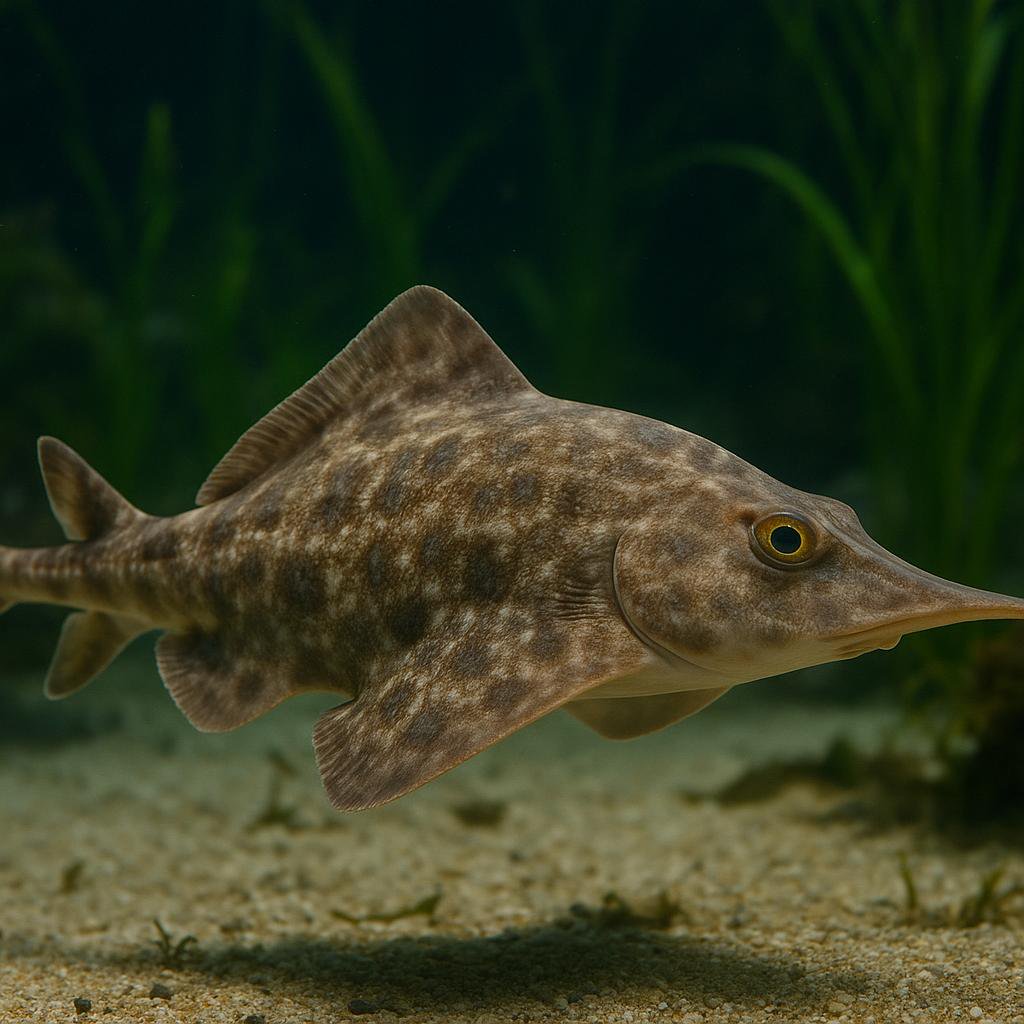
Aleutian skate
Bathyraja aleutica
This is a big, cold-water deep-slope skate from the North Pacific that cruises muddy bottoms and eats chunky benthic prey like crabs and shrimp. The really cool bit is its egg-laying skate life - it does distinct pairing (the classic skate "embrace") and drops those tough egg cases on the seafloor. Not an aquarium fish at all unless you're basically running a public-aquarium-style chilled system.
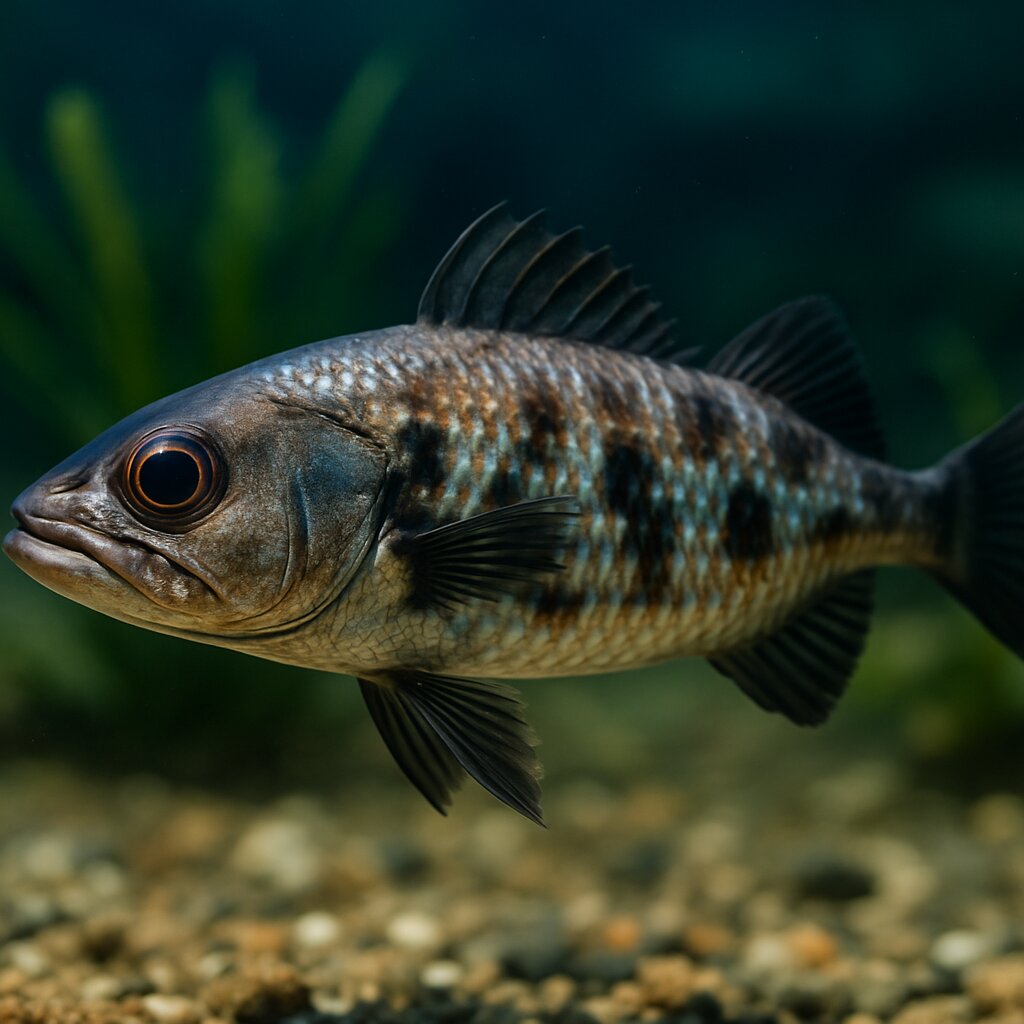
Antarctic dragonfish
Vomeridens infuscipinnis
Deep down around Antarctica, this sleek dragonfish cruises the water column like a little submarine, nearly neutrally buoyant so it can hover above the seafloor. It munches almost exclusively on Antarctic krill and lives in near-freezing water 500-800 m down, so it is a cool species to read about, not one for home tanks.
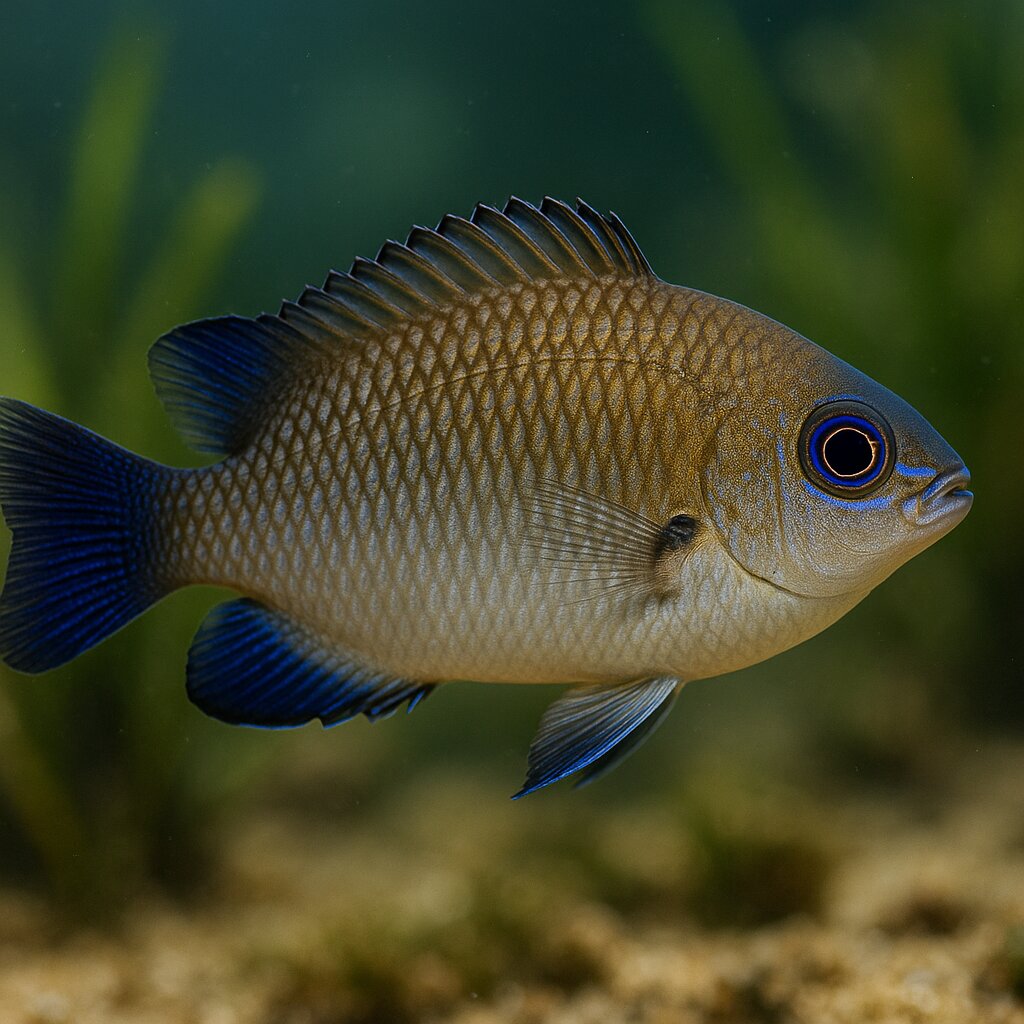
Arabian demoiselle
Neopomacentrus sindensis
A small lyretail damsel from the Persian Gulf and Arabian Sea, it hangs in loose groups around coral heads, rocks, and even pier pilings picking zooplankton from the flow. Think classic damsel toughness with a slightly milder attitude than the real bruisers, plus subtle yellow tail accents. Males clean a patch, get a mate to lay eggs there, and then stand guard fanning the clutch.
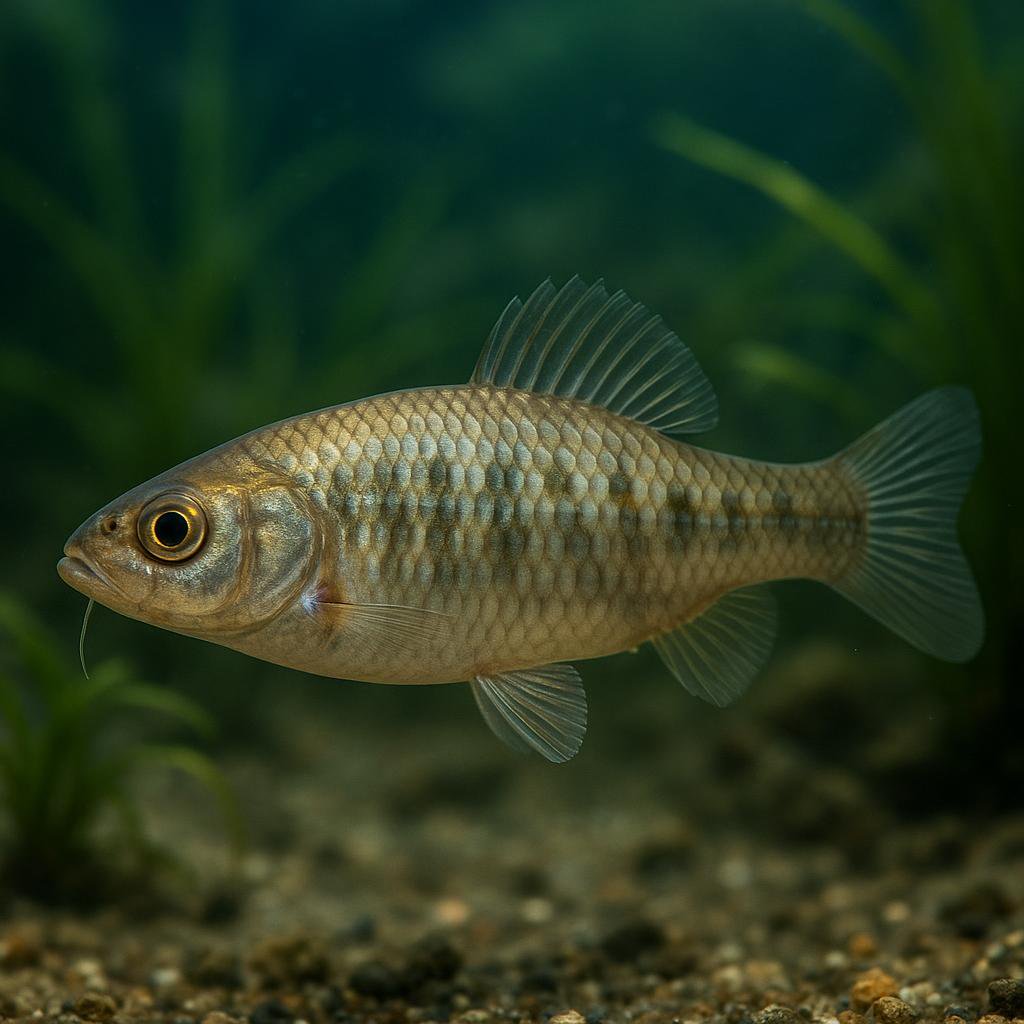
Arabian spiny eel
Notacanthus indicus
Notacanthus indicus is a deep-sea spiny eel (family Notacanthidae; not a true eel) known from the Arabian Sea on the continental slope at roughly ~960–1,046 m depth, with reported maximum length around 20 cm TL; it is a deep-water bycatch species and not established in the aquarium trade.
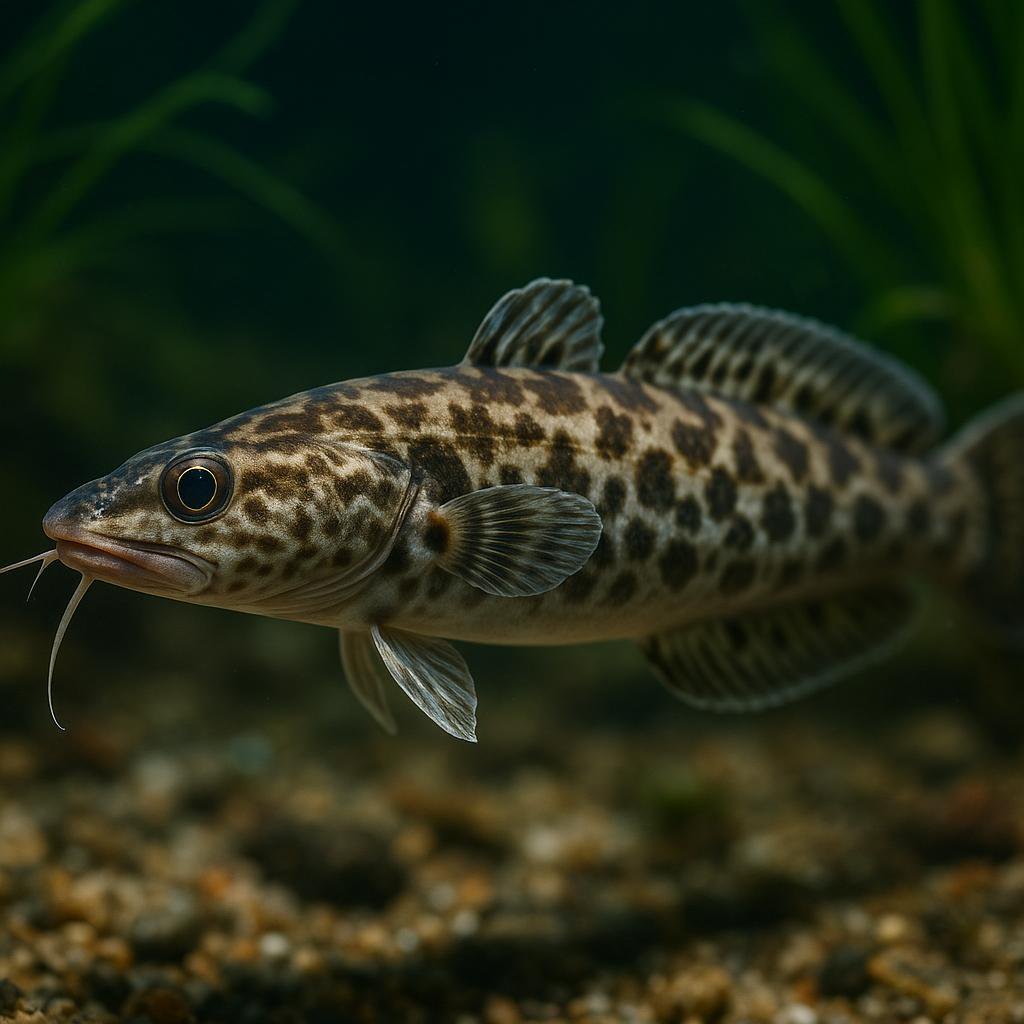
Arctic rockling
Gaidropsarus argentatus
This is a deepwater North Atlantic rockling (a cod relative) that hangs out on soft bottoms way down the slope. It is a cold-water, bottom-hugging predator that snoots around for crustaceans and will also take small fish when it gets the chance.
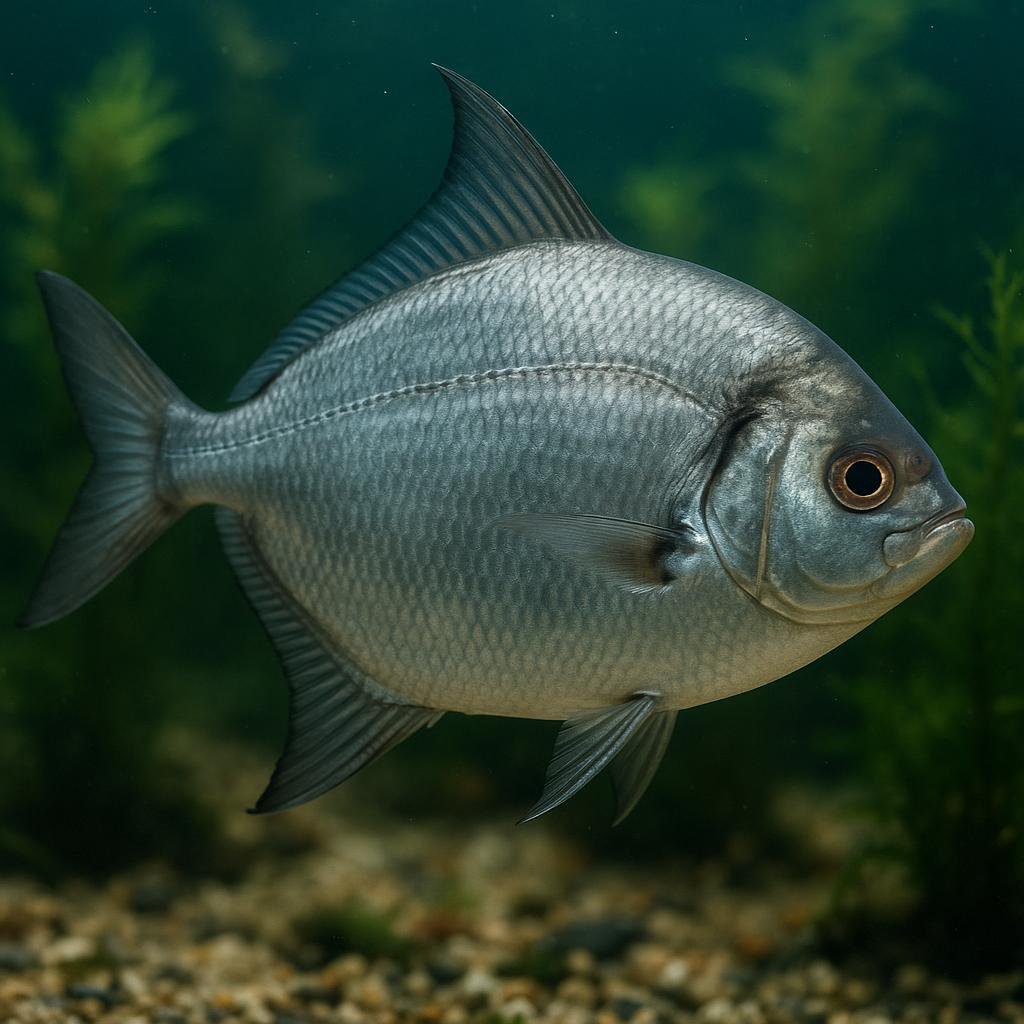
Atlantic pomfret
Brama brama
Brama brama is the Atlantic pomfret (aka Ray's bream) - a deep-bodied, open-ocean pelagic fish that cruises around in small schools and follows water temps. It is a legit big, wild marine species (not an aquarium fish) that eats other small sea critters like fish and squid, and it ranges across a huge chunk of the Atlantic plus parts of the Indian and South Pacific.
More to Explore
Discover more marine species.
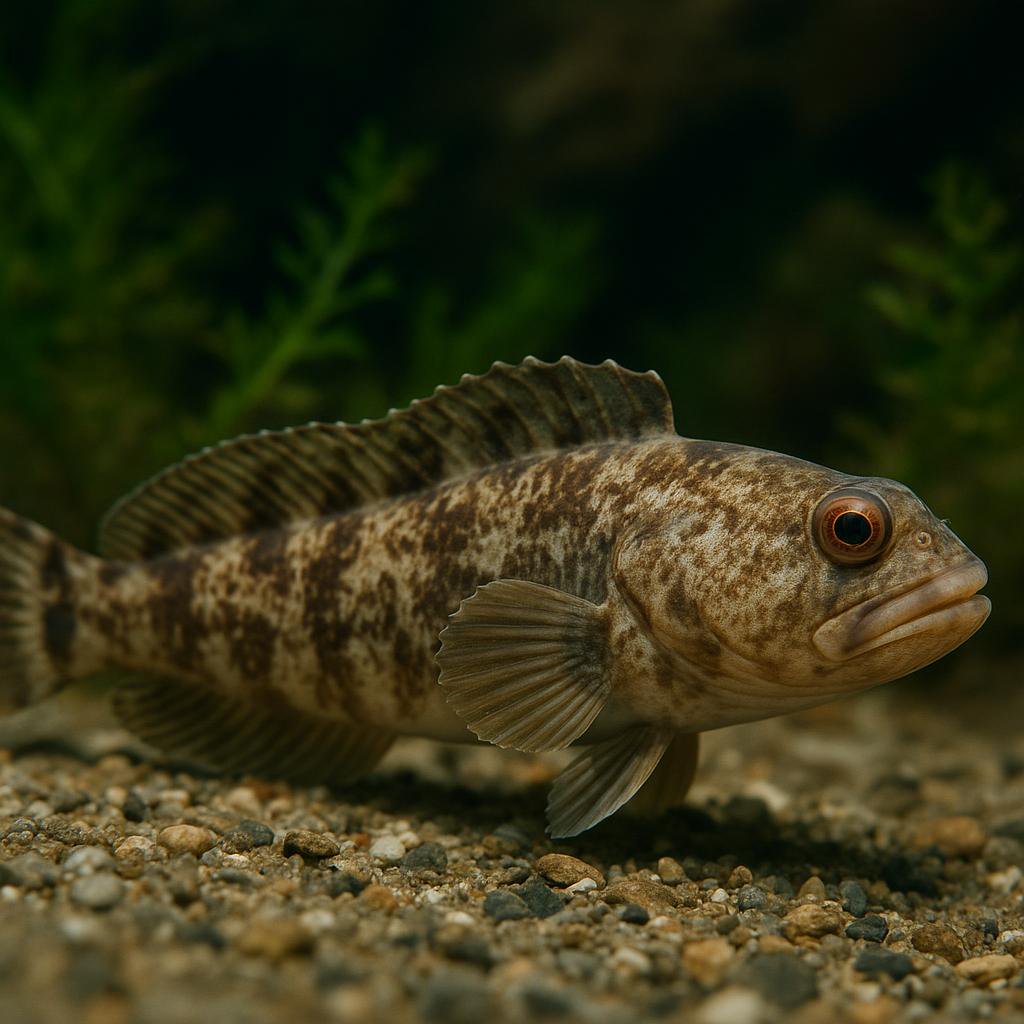
Abe's eelpout
Japonolycodes abei
Japonolycodes abei is a temperate, deepwater demersal eelpout (family Zoarcidae) endemic to Japan (Kumano-nada Sea reported; other sources also report Sagami Bay and Tosa Bay). It is the only species in the genus Japonolycodes and occurs roughly 40-300 m depth, making it an uncommon/atypical aquarium species.
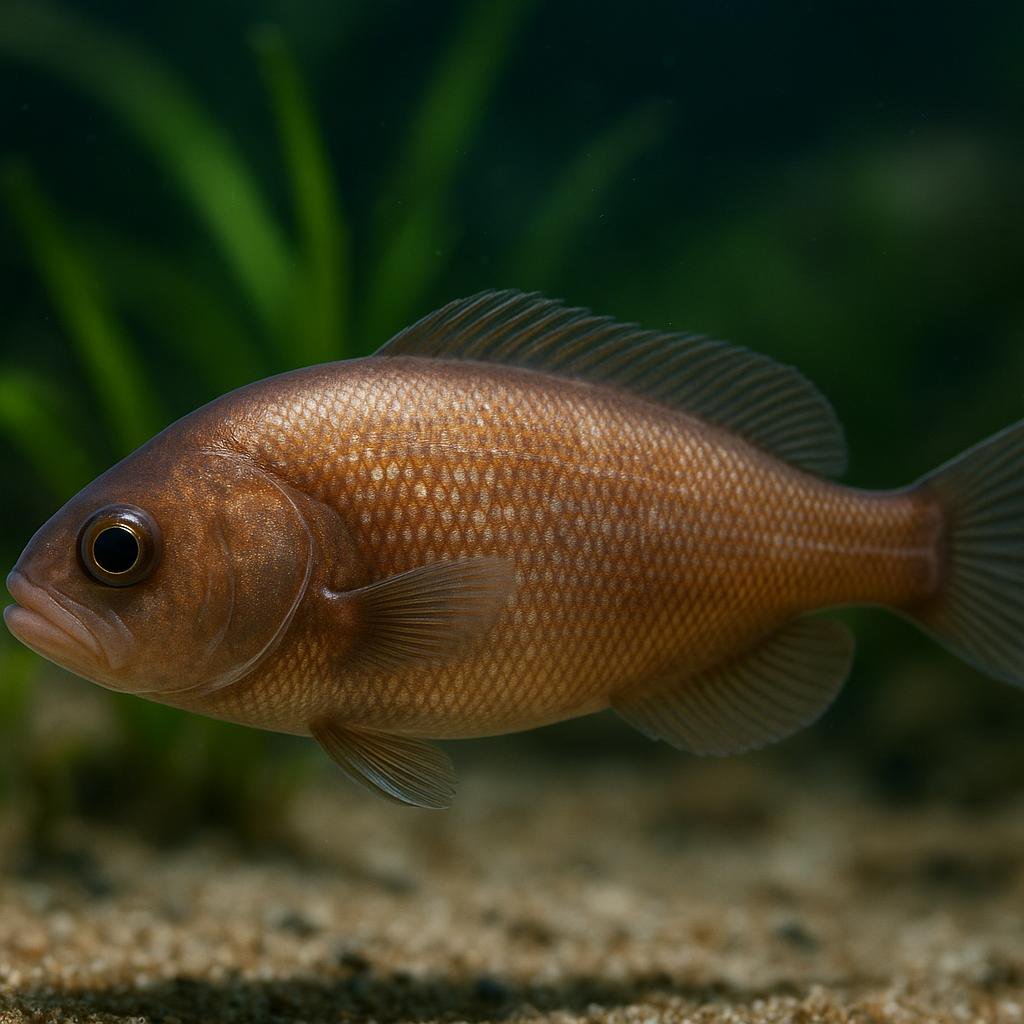
Affinis blind cusk-eel
Barathronus affinis
Barathronus affinis is a tiny, super-weird deep-sea blind cusk-eel from the western-central Indian Ocean. It is one of those gelatinous, loose-skinned brotula-type fishes that live way down in the dark and are basically never seen alive, so almost everything we know comes from preserved specimens and taxonomic work.
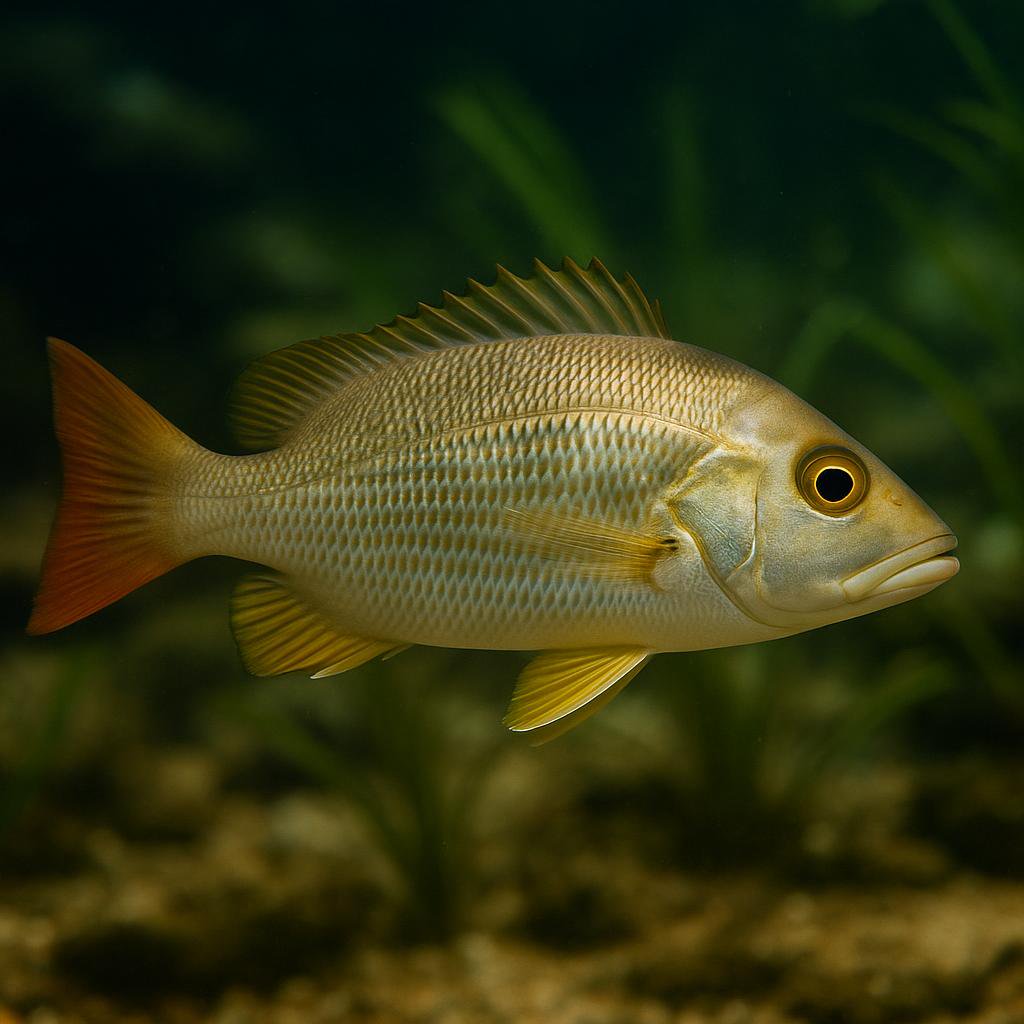
African red snapper
Lutjanus agennes
This is a true snapper from West Africa - a big, fast-growing predator that goes from coastal reefs to brackish lagoons and estuaries (especially as a juvenile). Super cool fish in the wild, but it gets absolutely huge and will eat smaller tankmates once it has the mouth for it, so its really more of a public-aquarium scale animal than a home-aquarium fish.
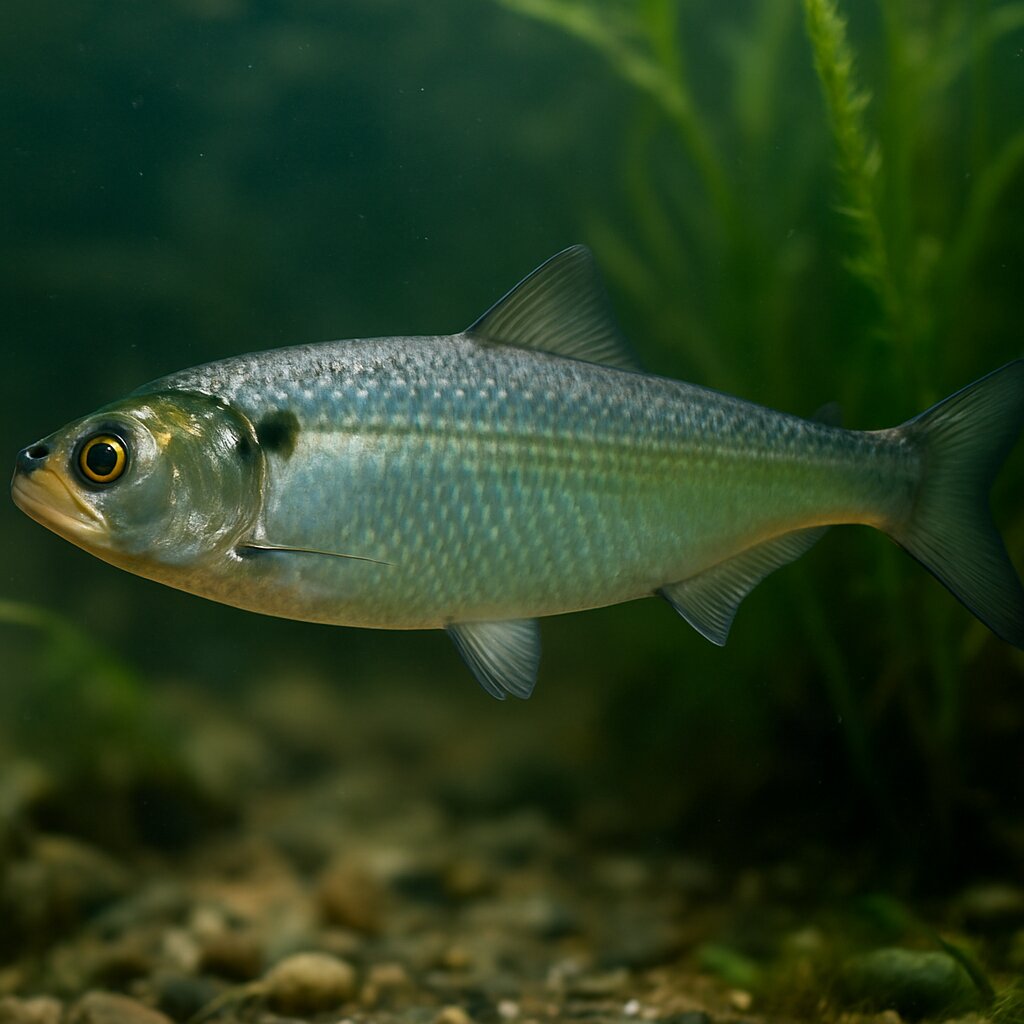
Allis shad
Alosa alosa
Gorgeous silver, fast-swimming shad that spends most of its life in the sea and then surges up big rivers in noisy, surface-spawning schools. It grows huge for a herring-type fish and needs cool, ultra-oxygenated water and tons of open space, so it is a public-aquarium species rather than a home tank fish.
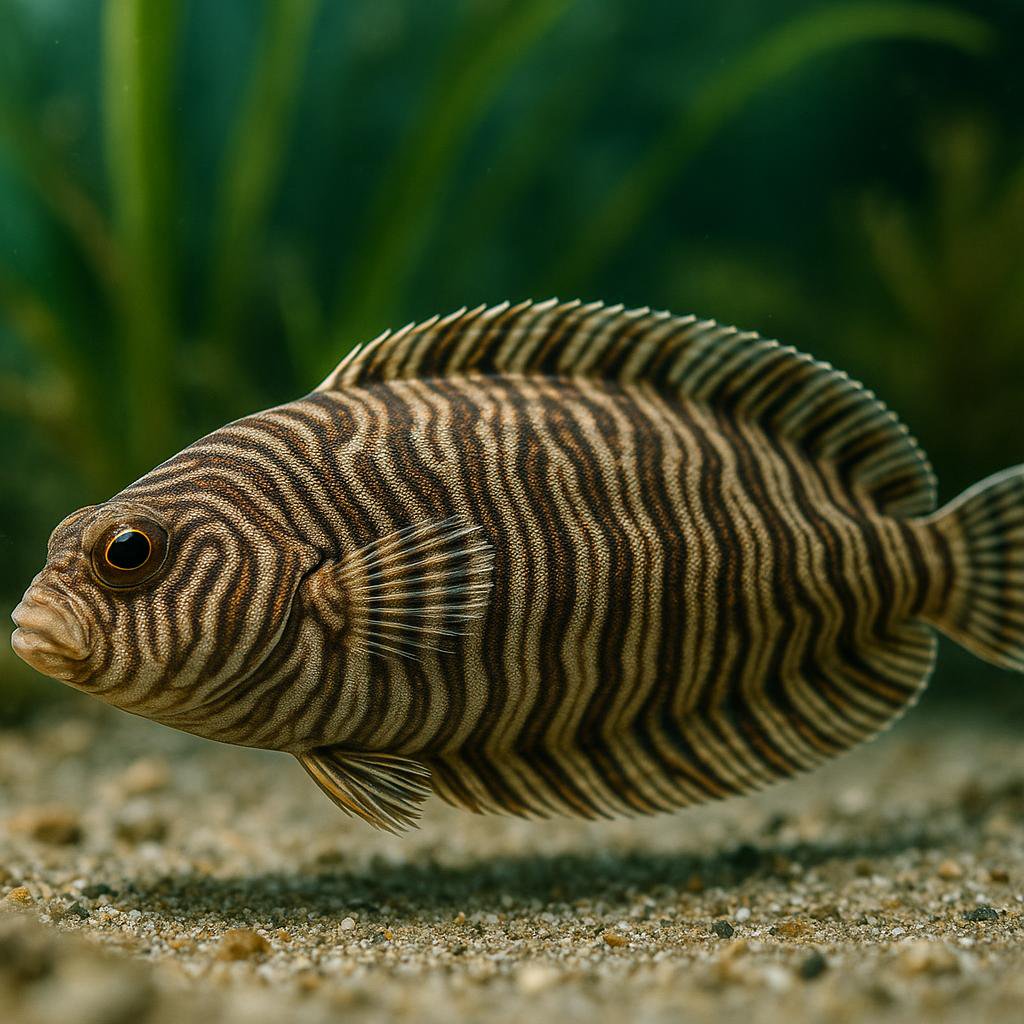
Annandale's zebra sole
Zebrias annandalei
Zebrias annandalei is a small demersal sole from coastal India that inhabits sandy or muddy bottoms and buries for camouflage. It is rarely kept in home aquaria and would require a specialized marine sand-bottom setup and appropriate feeding.
Australian sawtail catshark
Figaro boardmani
Figaro boardmani is a small, deepwater Australian catshark with these cool saw-like ridges of spiny denticles along the tail and a neat pattern of dark saddle bands. It lives way down on the outer continental shelf and slope, so its natural water is cold, dim, and stable - totally not a typical home-aquarium fish. Diet-wise its a predator that goes after fish, crustaceans, and cephalopods.
Looking for other species?