

Boulenger's anthias
Sacura boulengeri
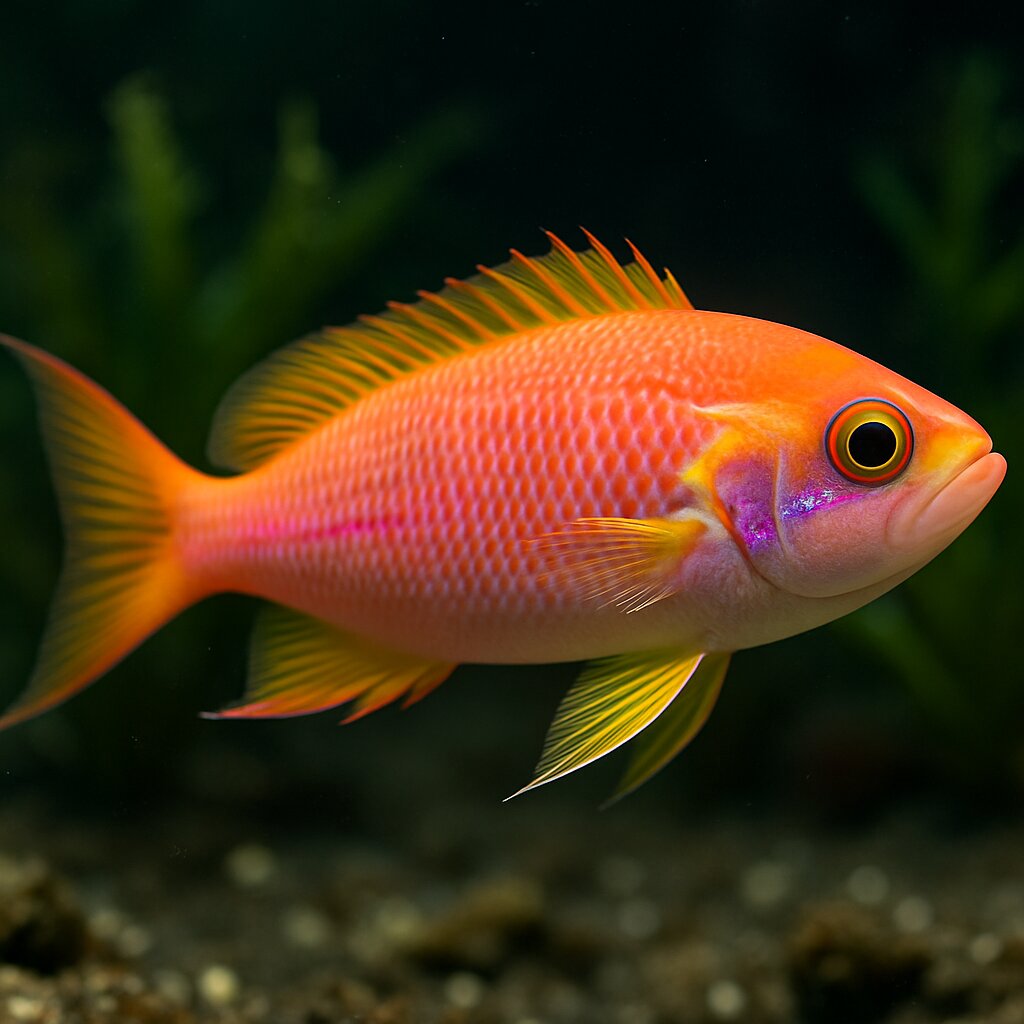
Boulenger's anthias exhibits vibrant orange-pink coloration with dark-edged fins and a distinctive elongated dorsal fin.
This page includes AI-generated images. Why am I seeing AI images?
About the Boulenger's anthias
Think of this as a deep-water anthias from the western Indian Ocean with flashy rose-pink striping and a sleek, forked tail. Males show bold horizontal bands and a long third dorsal spine that really pops under good lighting. It is a rare import and does best in a roomy, high-oxygen setup with frequent small feedings.
Also known as
Quick Facts
Size
7.5 inches
Temperament
Semi-aggressive
Difficulty
Expert
Min Tank Size
125 gallons
Lifespan
4-6 years
Origin
Western Indian Ocean
Diet
Carnivore - planktivore; offer small meaty foods (mysis, copepods, finely chopped seafood) several times daily
Water Parameters
22-26°C
8.1-8.4
7-12 dGH
Need a heater for this species?
This species needs 22-26°C in a 125 gallon tank. Use our heater calculator to find the right wattage.
Calculate heater sizeCare Notes
- Give this deepwater anthias a big, dim setup with strong, oxygen-rich flow - think 120+ gal for one, 180+ for a small group, with caves and overhangs to get out of the light.
- Run 72-75 F, SG 1.025-1.026, pH 8.1-8.4, and keep nutrients modest (NO3 2-10 ppm, PO4 0.02-0.08) with heavy aeration or a strong skimmer.
- Feed small meaty plankton foods 3-5 times a day - calanus, copepods, enriched mysis, fish roe, and tiny pellets like TDO B1-B2 or Hikari Marine S.
- Kickstart feeding with live or moving foods, then blend in frozen and finally small pellets; an auto-feeder keeps them from fading between meals.
- Pair with mellow midwater fish (fairy or flasher wrasses, peaceful gobies) and skip bullies like triggers, big wrasses, groupers, or pushy anthias that outcompete it.
- If you try a group, go 1 male with 3-5 females in a long tank with heavy feeding; otherwise keep a single female to cut stress and food demand.
- Quarantine in low light and high flow, and be ready to treat flukes and internal worms - praziquantel and metro-based protocols save a lot of skinny, reluctant eaters.
- Watch for barotrauma from deep collection (floating, head-up swimming) and walk away from those specimens; cover the tank tight, they will jump when spooked.
Compatibility
Good Tankmates
- Fairy and flasher wrasses that cruise midwater - similar speed and vibe; add at the same time and they ignore each other.
- Ctenochaetus and Zebrasoma tangs (kole, tomini, yellow) in a 4-6 ft tank - steady dither fish that keep the anthias out and confident.
- Halichoeres wrasses like melanurus or yellow coris - busy on the rocks, not food-bulldozers, and rarely bother anthias.
- Royal gramma and other small basslets - hold a cave and let the anthias own the water column.
- Reef-safe cardinalfish (banggai, pajama) with decent cover - feed a little extra so they are not outcompeted.
- Neon gobies and other small cleaner-type gobies - tiny, peaceful, and the anthias will ignore them.
Avoid
- Triggers, large boisterous angels, or Thalassoma-type wrasses - they will harass or outmuscle anthias at feeding time.
- Territorial damsels and most dottybacks - they park in the rock and pick fights with anything that passes.
- Lionfish, groupers, and big hawkfish - see small anthias as snacks or will lunge from perches.
- Other anthias males or mixed anthias species in tight quarters - males spar hard; stick to one male with several females.
Where they come from
Boulenger's anthias (Sacura boulengeri) are deepwater planktivores from the Western Pacific. Think Japan down through Taiwan and the Philippines, usually way below the recreational dive zone on steep reef slopes and drop-offs.
They hang in cool, very clear water with strong surge, popping in and out of ledges while picking off zooplankton. That deepwater background drives almost everything about how you keep them.
Plan for a cool, dim, high-oxygen system. If you treat them like shallow-reef anthias, they fade fast.
Setting up their tank
Give them room, shade, and flow. A single adult or pair can go in a 4-foot 90 gallon, but they really settle in a long 6-foot tank. For a harem (1 male, 4-8 females), think 125-180 gallons and up.
- Temperature: 68-73 F (20-23 C). A chiller is your friend.
- Salinity: 1.025-1.026 (35 ppt).
- pH: 8.0-8.3, stable.
- Flow: strong, mostly laminar across the front of the rockwork.
- Lighting: dim to moderate with shaded zones. Blue-heavy is fine, avoid blasting whites.
Aquascape tall, ledgy rock with caves and overhangs. They like a vertical face to hover in front of. Leave open water in front for schooling and feeding. Cover every gap on the top; they jump when spooked.
Oxygenation matters. Big skimmer, surface agitation, and healthy gas exchange. I run an airstone in the sump at night and keep the return pointed at the surface.
Acclimate lighting. Start at 20-30% intensity and bring it up slowly over 2-3 weeks. Feed during low light to get them comfortable.
What to feed them
They have high metabolisms and tiny mouths. Small, frequent meals beat big dumps. I aim for 3-5 feeds per day early on, then settle at 3 once they are eating dry food.
- Frozen: calanus, cyclops, finely chopped mysis, enriched baby brine (to start), fish roe, finely minced seafood.
- Live (to kickstart new arrivals): enriched artemia nauplii, copepods if you culture them.
- Dry: tiny sinking pellets (0.5-1 mm). TDO, similar reef pellets, or high-protein micro granules.
Soak foods in HUFA/vitamin enrichers a few times a week. Turn off return flow for 5-10 minutes so the food hangs in the display and they get more time to pick it off.
Masstick smeared under an overhang works great for shy eaters. Once they are pecking at that, they usually accept frozen in the water column.
How they behave and who they get along with
Peaceful midwater hoverers. In a group you will see a loose school cycling out into the flow to grab food, then retreating to the caves. They spook at sudden movement and bright light.
- Good tankmates: small fairy and flasher wrasses, gentle tangs (Kole, Tomini), Genicanthus angels, gobies, chromis that are not bullies, peaceful basslets.
- Use caution: big boisterous wrasses, aggressive Pseudanthias, dominant clownfish pairs, large angels that harass feeders.
- Reef safe with corals and inverts.
Keep one male per tank unless your system is enormous with multiple territories. A single male with several females works best. If you start with all females, the dominant one will turn male in a few weeks.
Food competition is the big problem. If you mix them with fast, greedy fish, your anthias lose weight even if it looks like they are eating.
Breeding tips
They are protogynous hermaphrodites. In a stable harem, the top female becomes male and displays at dusk. Spawning is a quick rise-and-release in the water column.
- Run a dusk ramp on your lights to encourage courtship.
- Give vertical water space and gentle, steady flow so they can do short spawning runs.
- Collecting and raising eggs is specialized. Larvae are tiny and need live plankton (rotifers then copepods) and very clean, stable conditions.
Most hobbyists stop at observing courtship. Actual rearing is doable only with dedicated larval systems and live-food cultures.
Common problems to watch for
- Decompression damage from collection: buoyancy issues, bulging eyes, gas bubbles under skin. Buy from vendors experienced with deepwater fish and ask for a feeding video.
- Refusing food for days: try live foods, dim the lights, feed at dawn/dusk, and offer small items that hang in the water column.
- Overheating: temps above mid-70s F lead to rapid breathing and color washout. Use a chiller in warm climates.
- Low oxygen at night: gilling hard, hanging at the surface. Add surface agitation and run the skimmer wet.
- Parasites and disease: velvet/ich can wipe them out fast. Quarantine new fish, observe for flashing or clamped fins, and treat promptly. Flukes are common; a praziquantel round in QT helps.
- Intra-harem fighting: two males or a female transitioning can beat up subordinates. Remove extra males or increase hiding spots.
Heavy feeding means heavier filtration. Big skimmer, frequent filter sock changes or a roller mat, and a refugium help keep nutrients in check without starving the fish.
Similar Species
Other marine semi-aggressive species you might be interested in.

Aleutian skate
Bathyraja aleutica
This is a big, cold-water deep-slope skate from the North Pacific that cruises muddy bottoms and eats chunky benthic prey like crabs and shrimp. The really cool bit is its egg-laying skate life - it does distinct pairing (the classic skate "embrace") and drops those tough egg cases on the seafloor. Not an aquarium fish at all unless you're basically running a public-aquarium-style chilled system.

Antarctic dragonfish
Vomeridens infuscipinnis
Deep down around Antarctica, this sleek dragonfish cruises the water column like a little submarine, nearly neutrally buoyant so it can hover above the seafloor. It munches almost exclusively on Antarctic krill and lives in near-freezing water 500-800 m down, so it is a cool species to read about, not one for home tanks.
Arabian demoiselle
Neopomacentrus sindensis
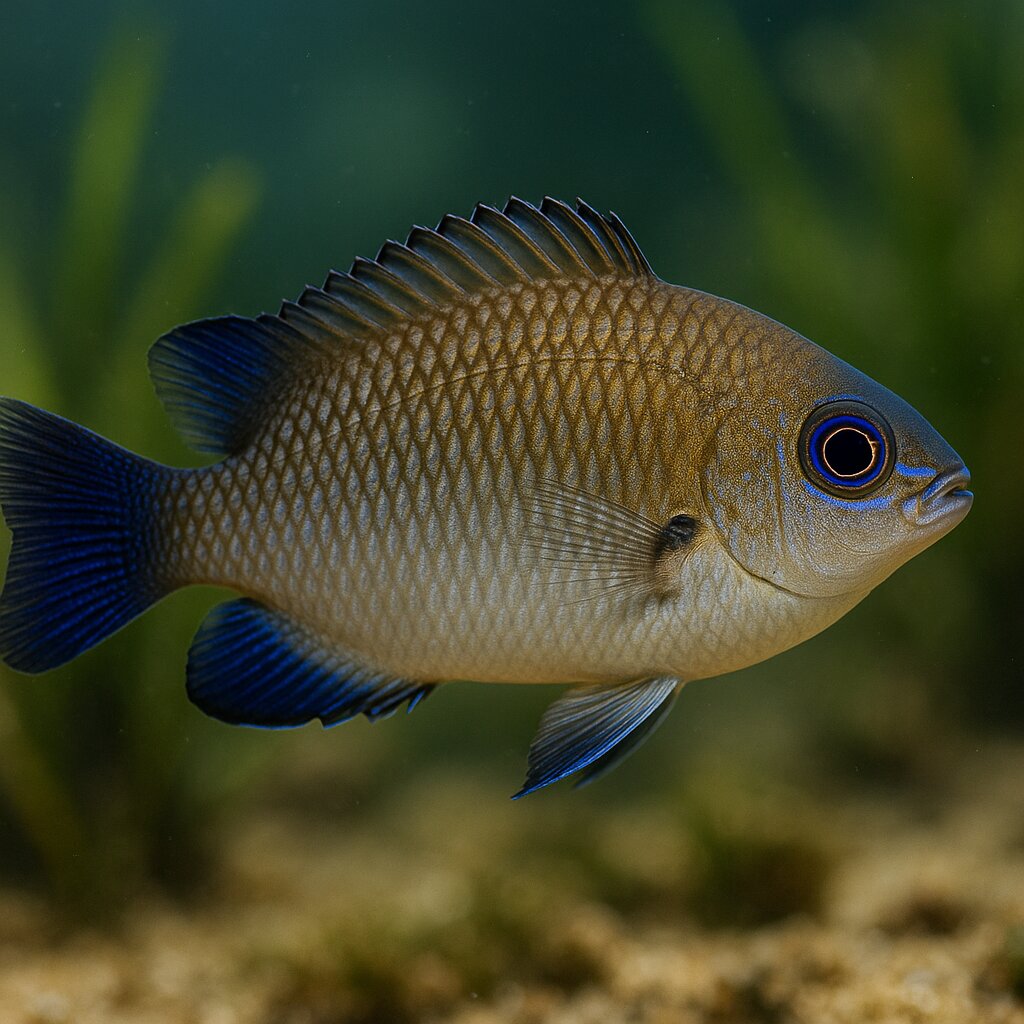
A small lyretail damsel from the Persian Gulf and Arabian Sea, it hangs in loose groups around coral heads, rocks, and even pier pilings picking zooplankton from the flow. Think classic damsel toughness with a slightly milder attitude than the real bruisers, plus subtle yellow tail accents. Males clean a patch, get a mate to lay eggs there, and then stand guard fanning the clutch.

Arabian spiny eel
Notacanthus indicus
Notacanthus indicus is a deep-sea spiny eel (family Notacanthidae; not a true eel) known from the Arabian Sea on the continental slope at roughly ~960–1,046 m depth, with reported maximum length around 20 cm TL; it is a deep-water bycatch species and not established in the aquarium trade.

Arctic rockling
Gaidropsarus argentatus
This is a deepwater North Atlantic rockling (a cod relative) that hangs out on soft bottoms way down the slope. It is a cold-water, bottom-hugging predator that snoots around for crustaceans and will also take small fish when it gets the chance.
Atlantic pomfret
Brama brama
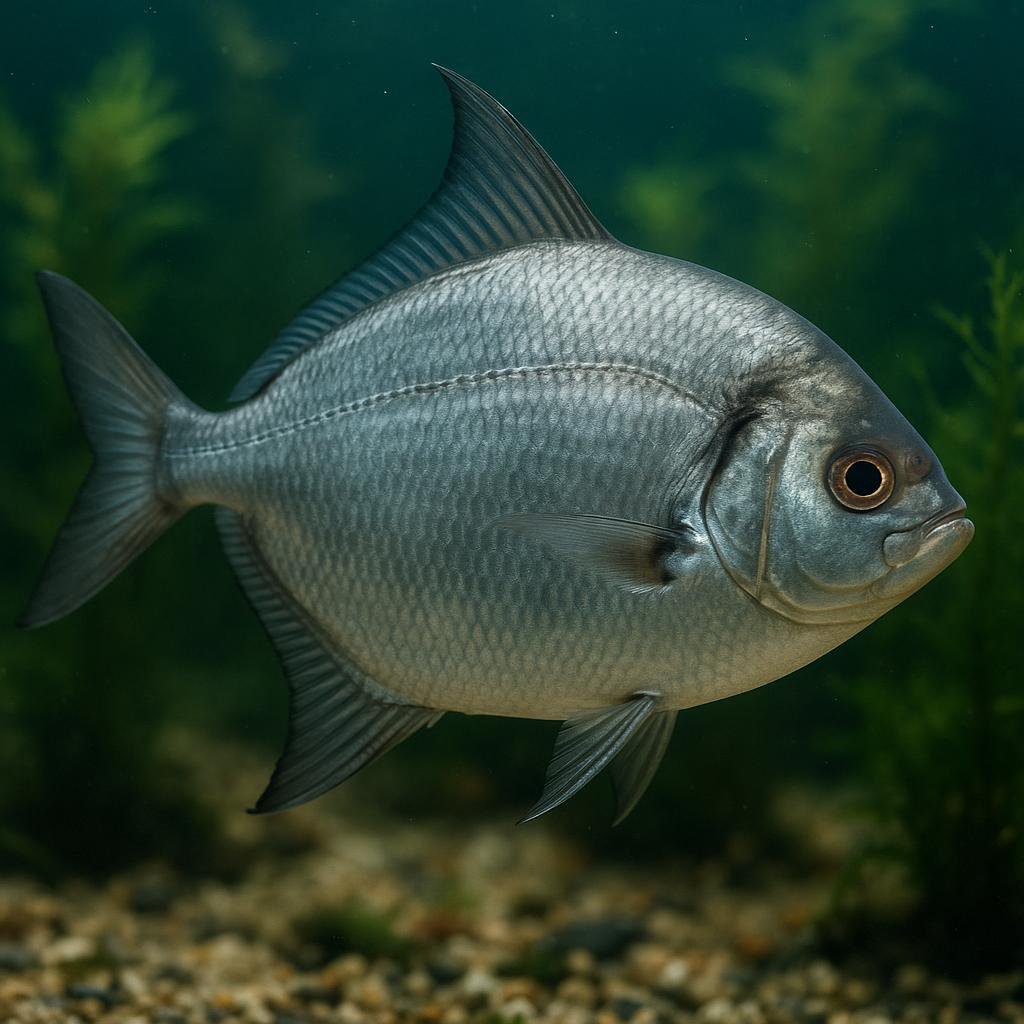
Brama brama is the Atlantic pomfret (aka Ray's bream) - a deep-bodied, open-ocean pelagic fish that cruises around in small schools and follows water temps. It is a legit big, wild marine species (not an aquarium fish) that eats other small sea critters like fish and squid, and it ranges across a huge chunk of the Atlantic plus parts of the Indian and South Pacific.
More to Explore
Discover more marine species.

Abe's eelpout
Japonolycodes abei
Japonolycodes abei is a temperate, deepwater demersal eelpout (family Zoarcidae) endemic to Japan (Kumano-nada Sea reported; other sources also report Sagami Bay and Tosa Bay). It is the only species in the genus Japonolycodes and occurs roughly 40-300 m depth, making it an uncommon/atypical aquarium species.

Affinis blind cusk-eel
Barathronus affinis
Barathronus affinis is a tiny, super-weird deep-sea blind cusk-eel from the western-central Indian Ocean. It is one of those gelatinous, loose-skinned brotula-type fishes that live way down in the dark and are basically never seen alive, so almost everything we know comes from preserved specimens and taxonomic work.

African red snapper
Lutjanus agennes
This is a true snapper from West Africa - a big, fast-growing predator that goes from coastal reefs to brackish lagoons and estuaries (especially as a juvenile). Super cool fish in the wild, but it gets absolutely huge and will eat smaller tankmates once it has the mouth for it, so its really more of a public-aquarium scale animal than a home-aquarium fish.

Allis shad
Alosa alosa
Gorgeous silver, fast-swimming shad that spends most of its life in the sea and then surges up big rivers in noisy, surface-spawning schools. It grows huge for a herring-type fish and needs cool, ultra-oxygenated water and tons of open space, so it is a public-aquarium species rather than a home tank fish.

Annandale's zebra sole
Zebrias annandalei
Zebrias annandalei is a small demersal sole from coastal India that inhabits sandy or muddy bottoms and buries for camouflage. It is rarely kept in home aquaria and would require a specialized marine sand-bottom setup and appropriate feeding.
Australian sawtail catshark
Figaro boardmani
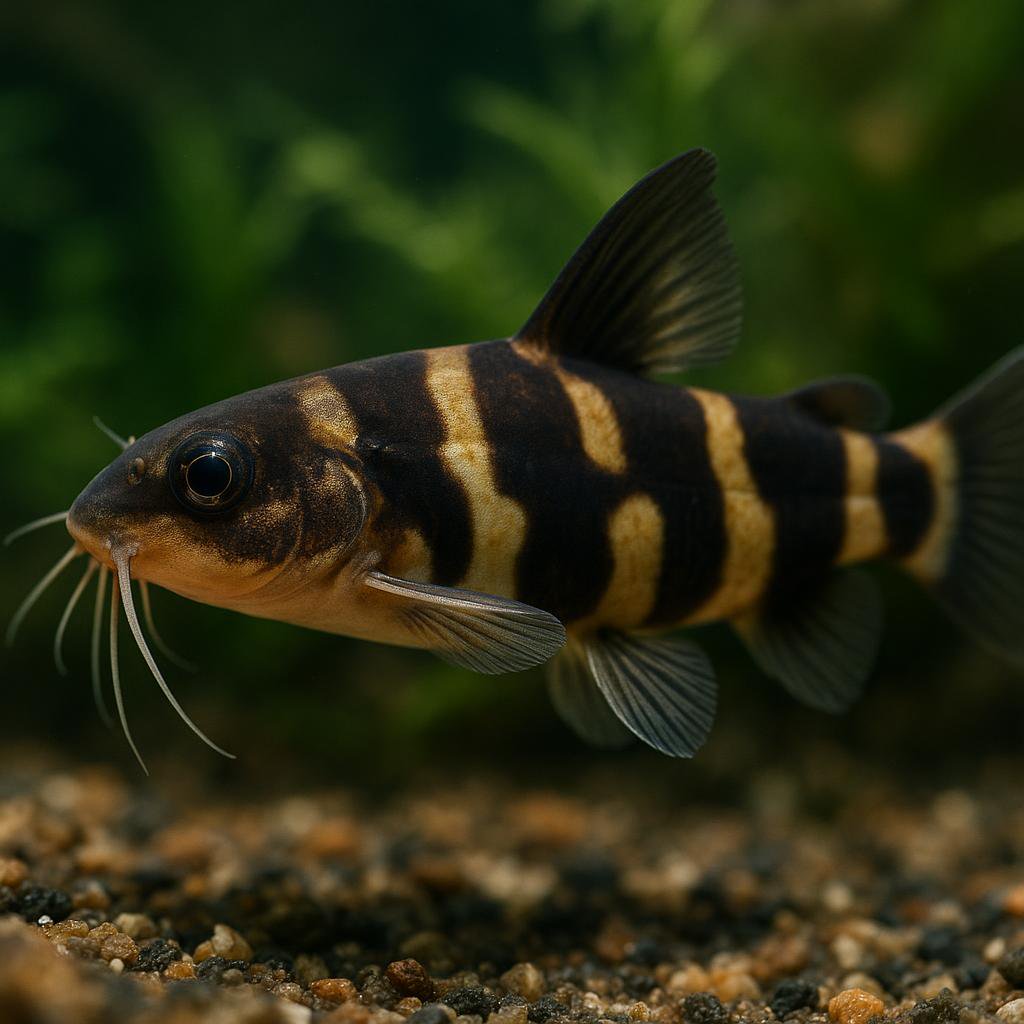
Figaro boardmani is a small, deepwater Australian catshark with these cool saw-like ridges of spiny denticles along the tail and a neat pattern of dark saddle bands. It lives way down on the outer continental shelf and slope, so its natural water is cold, dim, and stable - totally not a typical home-aquarium fish. Diet-wise its a predator that goes after fish, crustaceans, and cephalopods.
Looking for other species?