

Convict zebra sole
Zebrias captivus
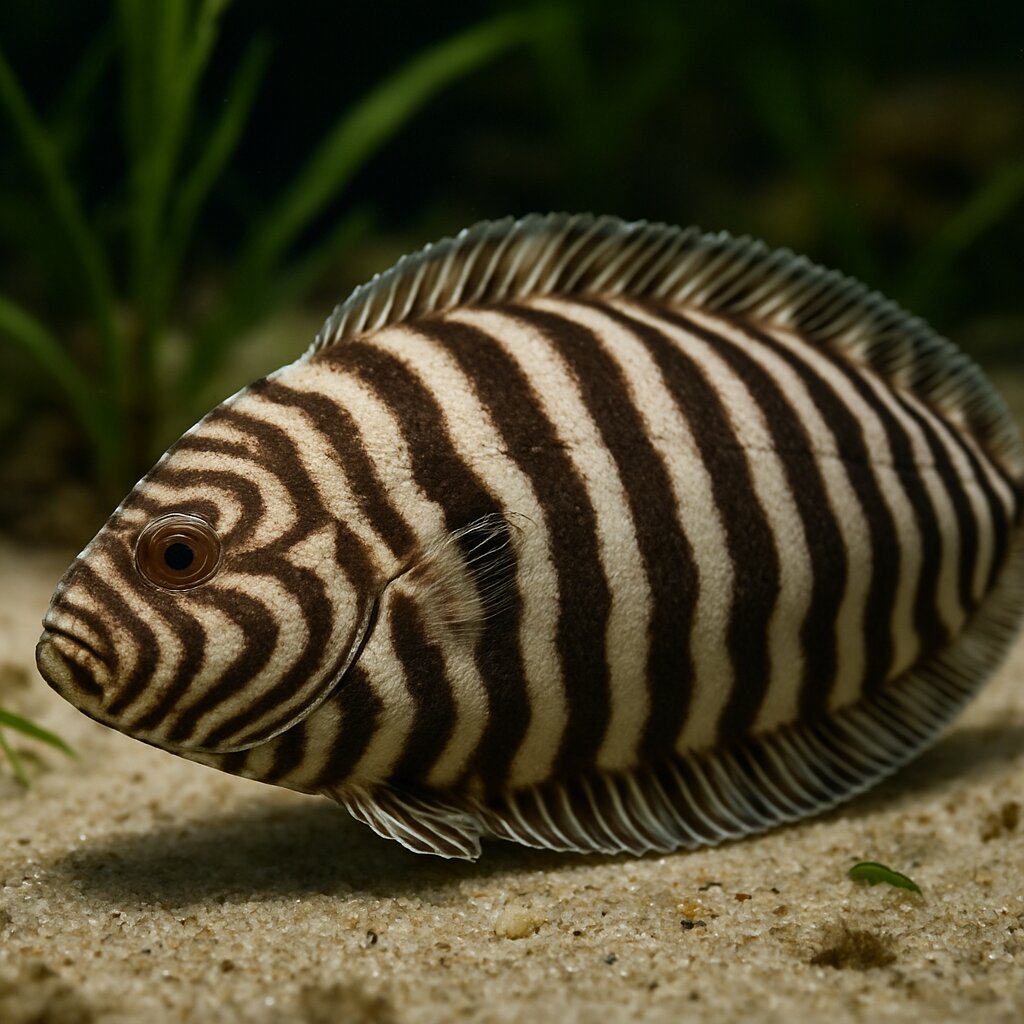
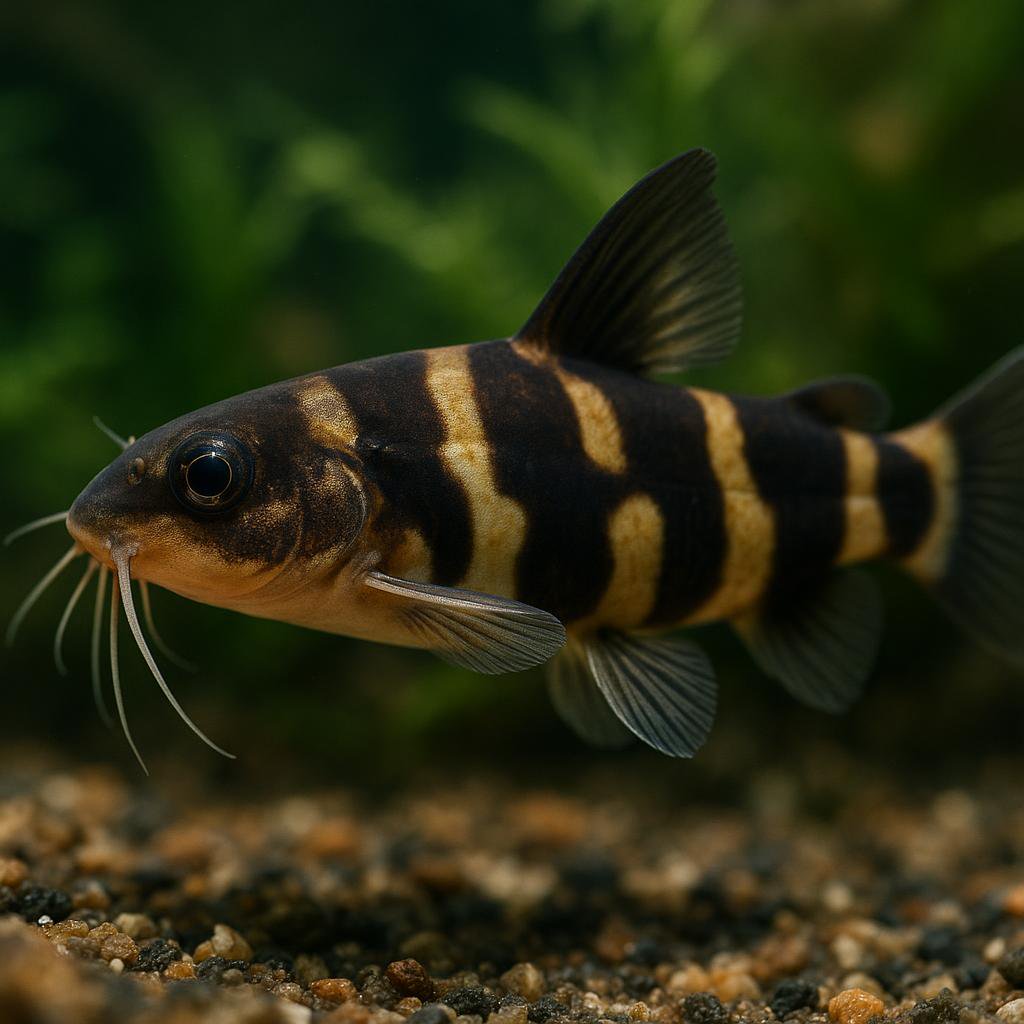
The Convict zebra sole exhibits a flattened body with bold black and white striped patterns, providing effective camouflage on sandy substrates.
This page includes AI-generated images. Why am I seeing AI images?
About the Convict zebra sole
Picture a tiny zebra-striped sole from the Persian Gulf that spends the day buried in fine sand with just its eyes showing. When the lights go down it slides out to nab worms and little crustaceans, so it needs a mature sand bed and meaty foods. Super cool pattern and stealthy behavior, but feeding makes it a specialist fish.
Also known as
Quick Facts
Size
3.8 inches
Temperament
Semi-aggressive
Difficulty
Advanced
Min Tank Size
30 gallons
Lifespan
8-12 years
Origin
Western Indian Ocean (Persian/Arabian Gulf)
Diet
Carnivore - benthic invertebrates; offer live or frozen worms, small shrimp, mysis
Water Parameters
25.4-29.4°C
8.1-8.4
300-400 dGH
Need a heater for this species?
This species needs 25.4-29.4°C in a 30 gallon tank. Use our heater calculator to find the right wattage.
Calculate heater sizeCare Notes
- Give it a big footprint tank (at least 40 breeder, 55+ is nicer) with 2-3 inches of fine sugar sand; skip crushed coral or it will get belly sores.
- Keep salinity 1.024-1.026, 76-78 F, pH 8.1-8.4, and nitrate under ~20 ppm; keep the numbers steady and use strong surface agitation, not blast flow on the sand.
- This fish almost always needs live food to start: live blackworms, live mysids, or gut-loaded ghost shrimp (drip-acclimated to saltwater) offered right at dusk with tongs or a pipette.
- Once it strikes reliably, switch to thawed mysis, chopped clam, or prawn by wiggling the food near its snout and partly burying it in the sand.
- Pair it with calm midwater fish; skip triggers, puffers, big wrasses, hawkfish, groupers, and sand-sifting gobies, and expect it to eat tiny shrimp or crabs that fit in its mouth.
- QT for 4-6 weeks; these soles often carry flukes and gut worms, so run praziquantel and metro, and go easy on copper because they handle it poorly.
- Use a tight lid and guard overflows and powerhead intakes; they bury, then bolt like a frisbee when spooked. Move it with a specimen container, not a net.
- Breeding is basically off the table in home tanks (pelagic spawner), so keep a single specimen and focus on feeding and clean sand.
Compatibility
Good Tankmates
- Midwater grazers like tangs and foxfaces that ignore the sandbed and do not pester bottom fish
- Fairy and flasher wrasses that sleep in the rocks and are too quick and midwater to get ambushed
- Larger clownfish pairs (ocellaris, percula, clarki) that stick to their turf and leave sand dwellers alone
- Rock-cave hangers like royal gramma and chalk bass that do not compete on the sand
- Adult-size cardinals (banggai, pajama) cruising midwater, not tiny juveniles that could be a snack
- Calm schooling fish like chromis or anthias, provided they are a solid size and not sleeping in the sand
Avoid
- Big bullies like triggers and large puffers that nip at flatfish and chew fins
- Rowdy sand-picking wrasses and hogfish (Thalassoma, Coris) that harass anything buried in the substrate
- Predators that will swallow a sole if they can fit it, like lionfish, groupers, and eels
- Tiny sand sitters and slow bottom fish (small gobies, firefish, mandarins) that can be ambushed or outcompeted
Where they come from
Convict zebra soles are Indo-West Pacific flatfish that hug sandy shallows, tide channels, and seagrass edges from Southeast Asia down into northern Australia. They spend the day buried in fine sand with just the eyes showing. Those black-and-white bars are not for fashion; they break up the outline so well you will swear the fish vanished.
Setting up their tank
Think footprint, not height. A single adult reaches around 8-10 inches and appreciates room to cruise the bottom. A 55 gallon with a 36 x 18 inch footprint is a good starting point for one fish. Bigger is easier.
- Sand bed: 2-3 inches of fine, soft sand (sugar-grain aragonite or smooth silica). Skip crushed coral and sharp blends.
- Rockwork: set rock directly on the glass, then add sand. Keep open sand lanes for burying and ambush.
- Flow: moderate overall with a calm zone. They like gentle water near the bottom.
- Filtration: a decent skimmer helps keep oxygen high. Soles sit on the bottom where O2 can dip.
- Mature tank: give it a few months so microfauna builds up. New, sterile tanks are tough for this fish.
- Covers and guards: lid on top, sponge or mesh over overflows and powerhead intakes.
Give them a sand-filled feeding corner or a shallow dish. They learn that is the spot to watch for food, and you keep leftovers contained.
- Temperature: 75-80 F (24-27 C)
- Salinity: 1.024-1.026
- pH: 8.0-8.4
- Zero ammonia/nitrite, nitrate under ~20 ppm
What to feed them
They are ambush micro-predators. New arrivals often ignore prepared foods, so plan on starting with live and working toward frozen.
- First week or two: live blackworms (rinsed well), live glass/ghost shrimp acclimated to salt, small shore shrimp, amphipods from a refugium.
- Then mix in frozen: PE mysis, enriched brine (as a carrier, not a staple), chopped raw shrimp, clam, squid. Add a few live items to get them interested.
- Target feed: use tongs and gently wiggle food in front of the mouth, or tuck it into the sand right by the eyes. They key in on movement.
- Timing: feed at dusk or with the room dim. They get bolder as lights go down.
- Frequency: small portions 5-6 days a week. They do better with many small feedings than big dumps.
- Boost nutrition: soak frozen foods in a vitamin/HUFA supplement once or twice a week.
Do not buy one expecting it to "clean the sand" or live on pods. They are not janitors and they starve quietly if you rely on scraps.
How they behave and who they get along with
Calm fish, but all business at mealtime. Anything bite-sized that lingers near the sand can disappear. Most of the day they half-bury and watch the world go by.
- Good tankmates: peaceful midwater fish that are too large to swallow, like bigger ocellaris clowns, larger cardinalfish, robust fairy/basslet types that ignore the bottom.
- Use caution: tiny gobies, firefish, small dartfish. Juveniles can be a snack.
- Not a match: aggressive wrasses, triggers, puffers, goatfish, large sand-sifting gobies that will harass them. They hate being pestered.
- Inverts: snails and large hermits are usually fine. Small shrimp and tiny crabs are food.
Keeping more than one sole takes a big footprint and lots of open sand. They can get territorial over the best burying spots.
Breeding tips
Realistically not a home project. Flatfish have pelagic larvae that go through a wild metamorphosis where one eye migrates. Public aquariums have tackled it; hobbyists usually have not. If you notice pairing behavior, enjoy the show, but do not expect to raise fry.
Common problems to watch for
- Feeding strike: the big one. Start with live foods and wean slowly. Watch body profile; a pinched-in look behind the head means you need to step up feedings.
- Abrasions: coarse substrate scrapes their skin. Switch to finer sand and keep it clean.
- Parasites/worms: very common on wild flatfish. Quarantine and run two rounds of praziquantel. Freshwater dips can help with flukes if done carefully.
- Medication sensitivity: like many scaleless/bottom fish, they do not handle heavy copper well. If you must treat, test often and keep copper on the low end of the therapeutic range, or use an alternative method under guidance.
- Mouth damage: check before buying. A torn mouth means trouble eating and slow recovery.
- Flow and intakes: they will sit right on a pump guard. Make sure guards are secure so they do not get sucked in or abraded.
- Heat and low oxygen: they live at the bottom where O2 can run low. Keep surface agitation up and avoid summer spikes.
Quarantine with a sand box. A plastic container full of fine sand in a bare QT tank lets them bury and de-stress. Without sand, many refuse food.
Rock slides crush flatfish. Place rock on the glass first, then add sand. They will dig under things you did not think they could.
Similar Species
Other marine semi-aggressive species you might be interested in.
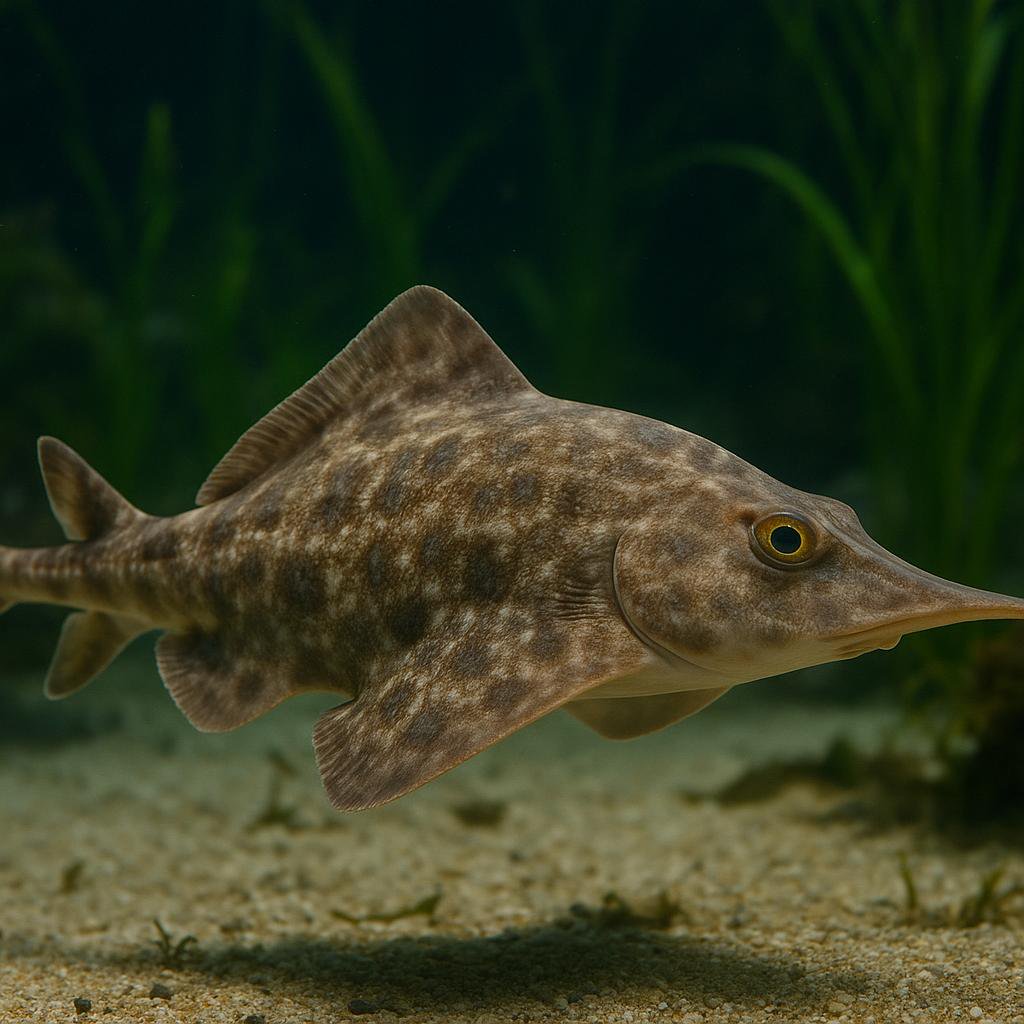
Aleutian skate
Bathyraja aleutica
This is a big, cold-water deep-slope skate from the North Pacific that cruises muddy bottoms and eats chunky benthic prey like crabs and shrimp. The really cool bit is its egg-laying skate life - it does distinct pairing (the classic skate "embrace") and drops those tough egg cases on the seafloor. Not an aquarium fish at all unless you're basically running a public-aquarium-style chilled system.
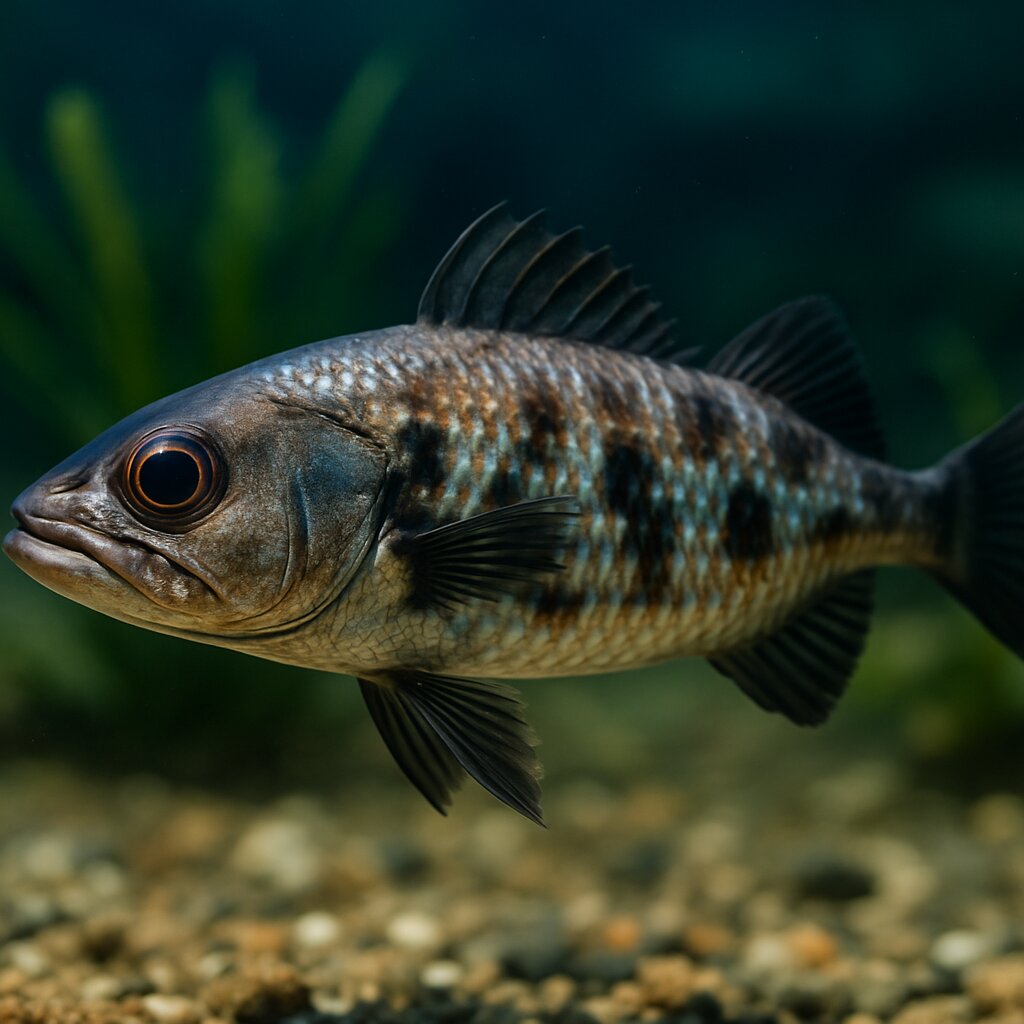
Antarctic dragonfish
Vomeridens infuscipinnis
Deep down around Antarctica, this sleek dragonfish cruises the water column like a little submarine, nearly neutrally buoyant so it can hover above the seafloor. It munches almost exclusively on Antarctic krill and lives in near-freezing water 500-800 m down, so it is a cool species to read about, not one for home tanks.
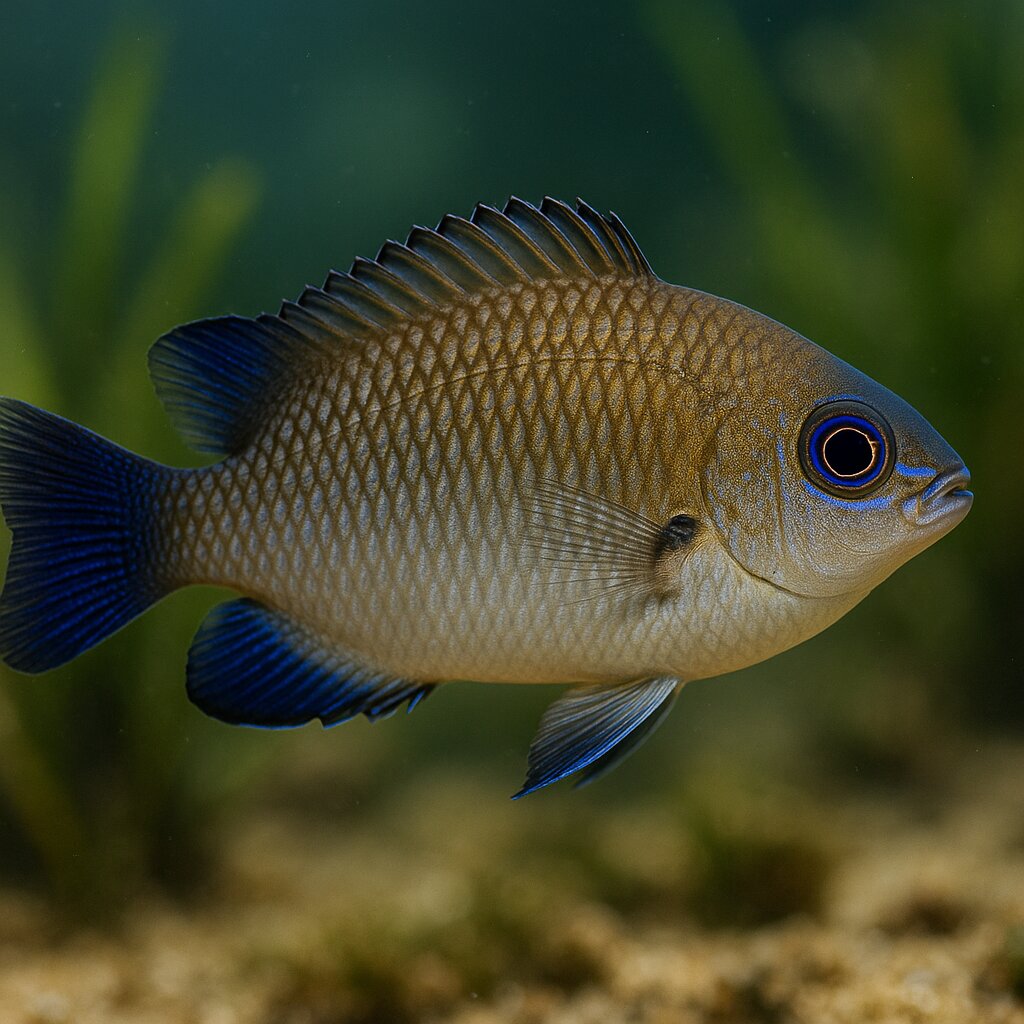
Arabian demoiselle
Neopomacentrus sindensis
A small lyretail damsel from the Persian Gulf and Arabian Sea, it hangs in loose groups around coral heads, rocks, and even pier pilings picking zooplankton from the flow. Think classic damsel toughness with a slightly milder attitude than the real bruisers, plus subtle yellow tail accents. Males clean a patch, get a mate to lay eggs there, and then stand guard fanning the clutch.
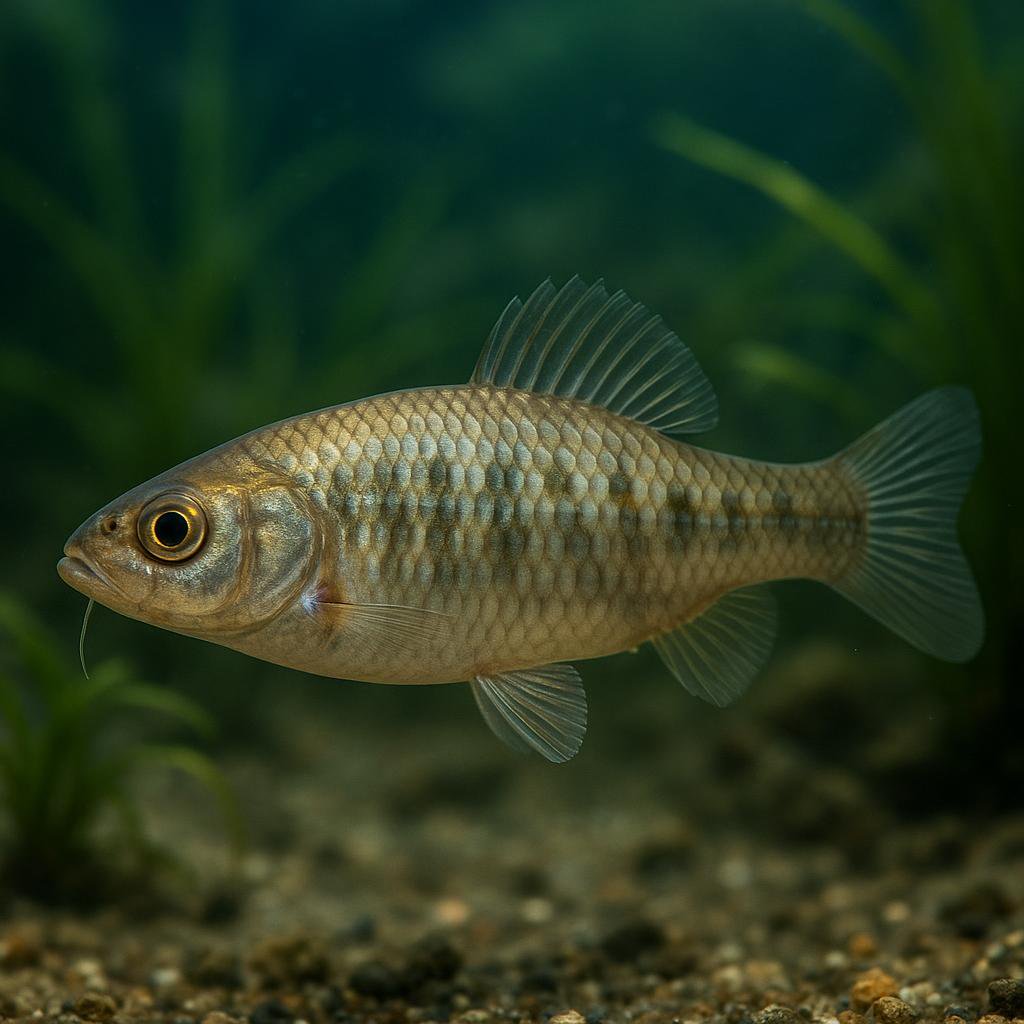
Arabian spiny eel
Notacanthus indicus
Notacanthus indicus is a deep-sea spiny eel (family Notacanthidae; not a true eel) known from the Arabian Sea on the continental slope at roughly ~960–1,046 m depth, with reported maximum length around 20 cm TL; it is a deep-water bycatch species and not established in the aquarium trade.
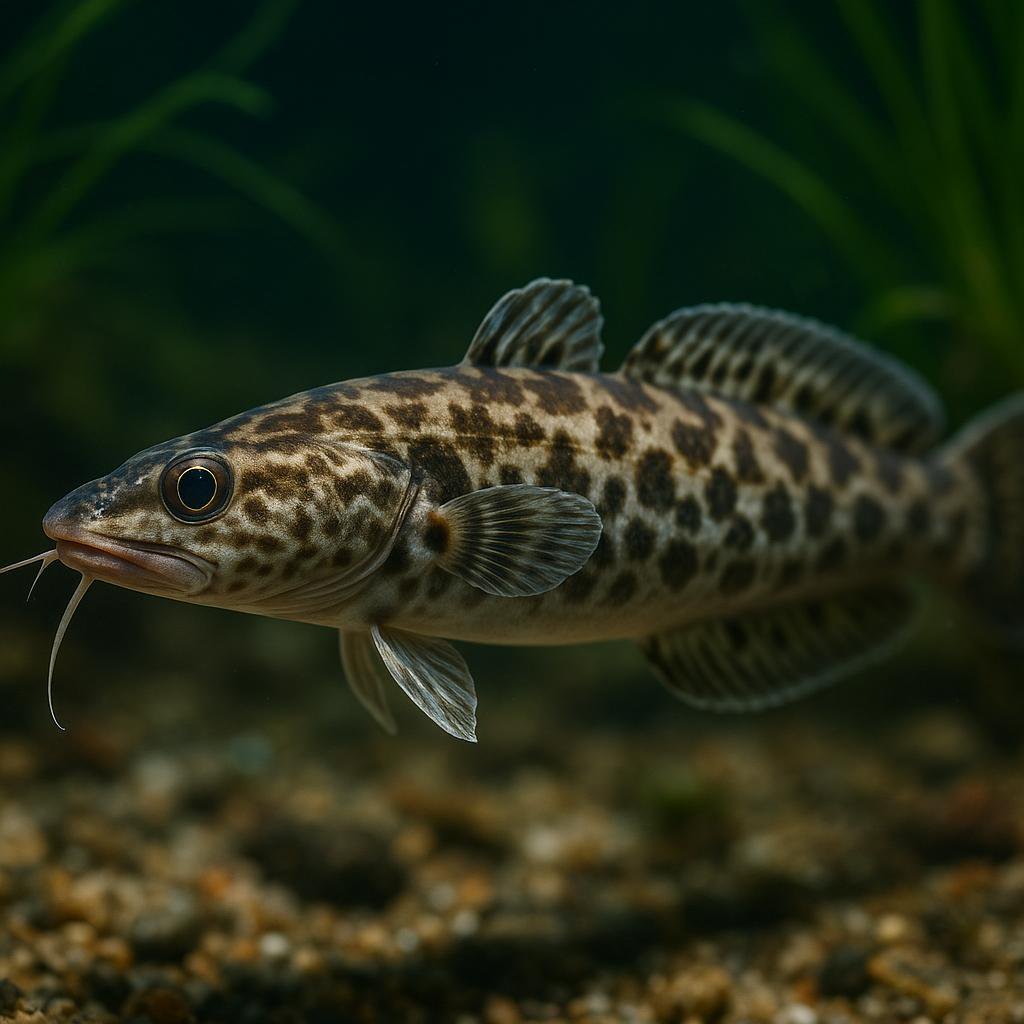
Arctic rockling
Gaidropsarus argentatus
This is a deepwater North Atlantic rockling (a cod relative) that hangs out on soft bottoms way down the slope. It is a cold-water, bottom-hugging predator that snoots around for crustaceans and will also take small fish when it gets the chance.
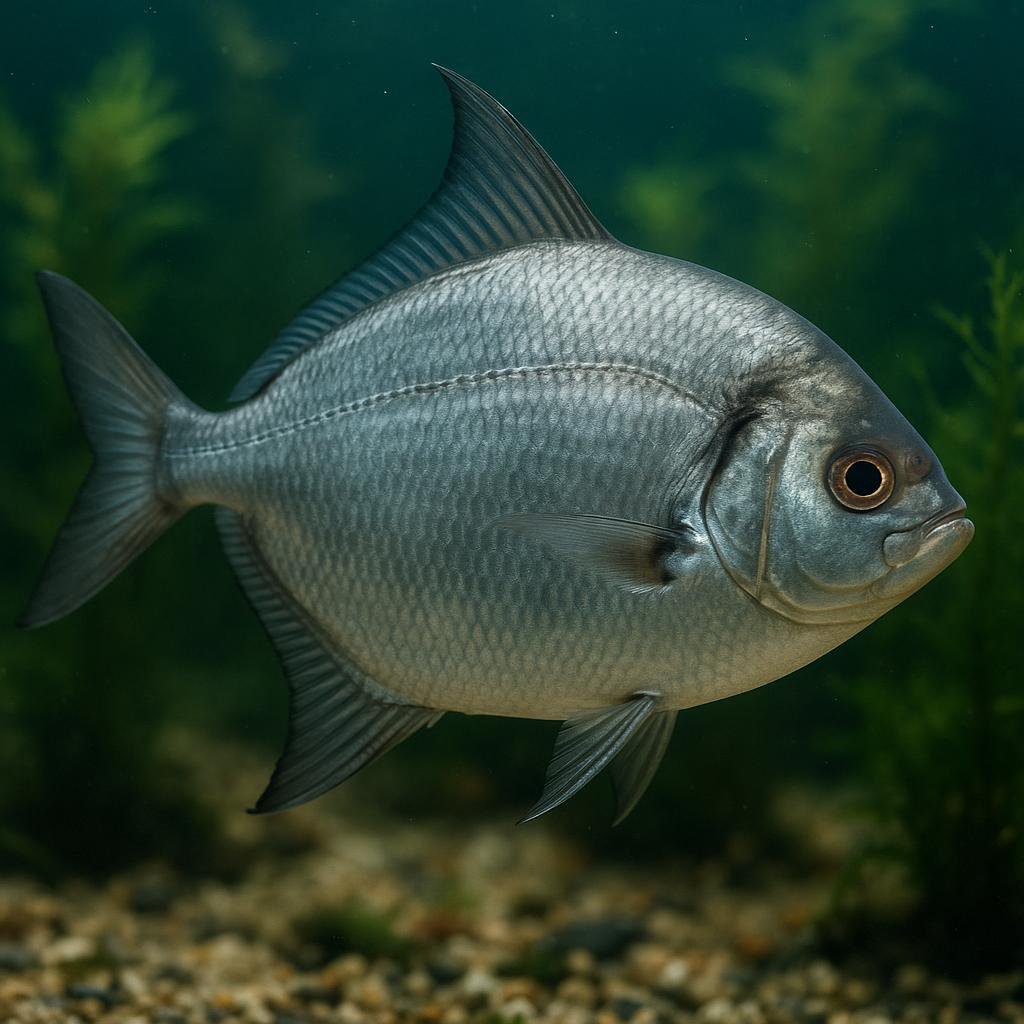
Atlantic pomfret
Brama brama
Brama brama is the Atlantic pomfret (aka Ray's bream) - a deep-bodied, open-ocean pelagic fish that cruises around in small schools and follows water temps. It is a legit big, wild marine species (not an aquarium fish) that eats other small sea critters like fish and squid, and it ranges across a huge chunk of the Atlantic plus parts of the Indian and South Pacific.
More to Explore
Discover more marine species.
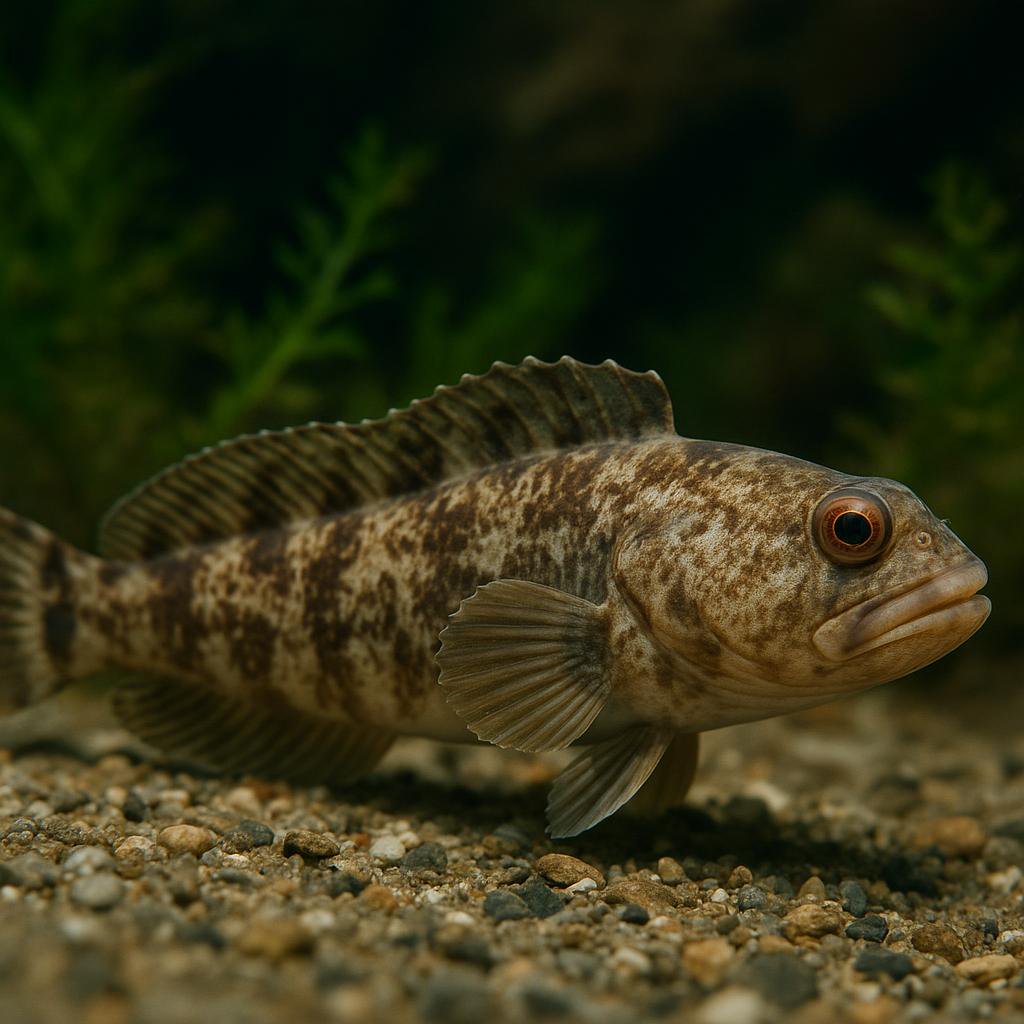
Abe's eelpout
Japonolycodes abei
Japonolycodes abei is a temperate, deepwater demersal eelpout (family Zoarcidae) endemic to Japan (Kumano-nada Sea reported; other sources also report Sagami Bay and Tosa Bay). It is the only species in the genus Japonolycodes and occurs roughly 40-300 m depth, making it an uncommon/atypical aquarium species.
Affinis blind cusk-eel
Barathronus affinis
Barathronus affinis is a tiny, super-weird deep-sea blind cusk-eel from the western-central Indian Ocean. It is one of those gelatinous, loose-skinned brotula-type fishes that live way down in the dark and are basically never seen alive, so almost everything we know comes from preserved specimens and taxonomic work.
African red snapper
Lutjanus agennes
This is a true snapper from West Africa - a big, fast-growing predator that goes from coastal reefs to brackish lagoons and estuaries (especially as a juvenile). Super cool fish in the wild, but it gets absolutely huge and will eat smaller tankmates once it has the mouth for it, so its really more of a public-aquarium scale animal than a home-aquarium fish.
Allis shad
Alosa alosa
Gorgeous silver, fast-swimming shad that spends most of its life in the sea and then surges up big rivers in noisy, surface-spawning schools. It grows huge for a herring-type fish and needs cool, ultra-oxygenated water and tons of open space, so it is a public-aquarium species rather than a home tank fish.
Annandale's zebra sole
Zebrias annandalei
Zebrias annandalei is a small demersal sole from coastal India that inhabits sandy or muddy bottoms and buries for camouflage. It is rarely kept in home aquaria and would require a specialized marine sand-bottom setup and appropriate feeding.
Australian sawtail catshark
Figaro boardmani
Figaro boardmani is a small, deepwater Australian catshark with these cool saw-like ridges of spiny denticles along the tail and a neat pattern of dark saddle bands. It lives way down on the outer continental shelf and slope, so its natural water is cold, dim, and stable - totally not a typical home-aquarium fish. Diet-wise its a predator that goes after fish, crustaceans, and cephalopods.
Looking for other species?